
What to Do Between World Cup Matches in Seattle
The question of what to do between World Cup matches in Seattle gets more interesting the longer you sit with it. The tournament runs from mid-June through early July, which is the city’s best stretch of the year by most measures: long days, the mountains visible across Elliott Bay, the waterfront newly completed and finally living up to its potential. You’ve come for the football. Seattle has a way of pulling your attention elsewhere.
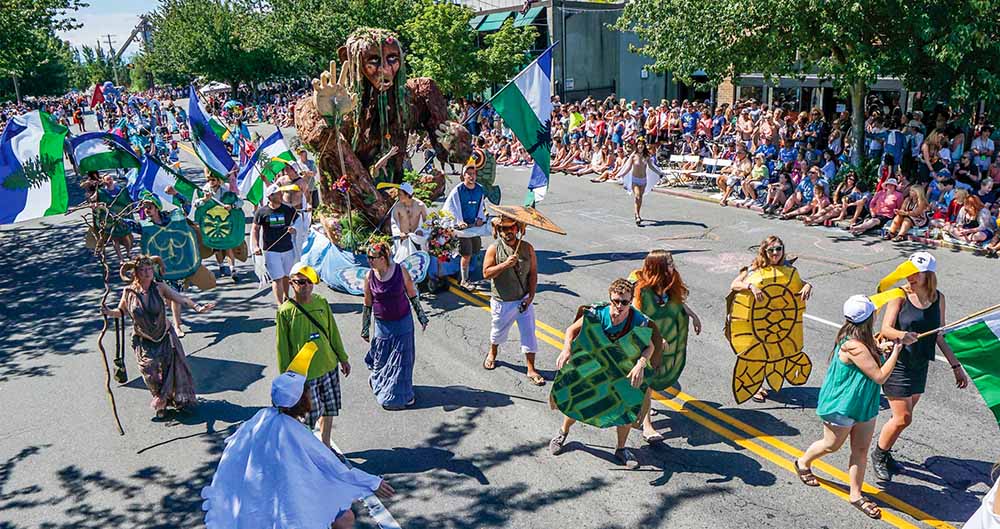
Seattle summers run full. The Fremont Solstice Parade on June 20 is worth knowing about before you arrive. It’s the one famous for its nude cyclists (yes, an actual tradition, and yes, exactly what it sounds like), handmade floats, and kinetic art, and it’s been running every June since 1989. Juneteenth brings citywide celebrations on June 19, the same day as the USA match. Seattle Pride follows the week after. The summer calendar doesn’t wait for the tournament to give it an occasion.
The days between matches in a city like this don’t need to be filled. They tend to fill themselves. The question is just where to start.

Pike Place Market and the Waterfront Bluff
Pike Place Market sits on the bluff above the waterfront, its face looking out over Elliott Bay. The market has operated on this site since 1907, for roughly the same reasons it started: fishing boats came in below, farmers came in from the valleys, and the city gathered to buy what they brought. The fish throwers at Pike Place Fish Market are still here, the flower stalls still spill into the aisles, and the maze of Lower Pike Place, descending through several floors in the cliff beneath the main arcade, still surprises people who’ve been coming for years.
The view from the market’s western edge is one of the better casual views in the city, the ferry terminal visible below and Elliott Bay stretching west toward the Olympics. Standing at the railing with the market’s stone walls framing you on either side, the horizon is more water and mountain than city. The Overlook Walk connects the market level to the waterfront promenade via a hillclimb of terraced gardens, making the walk between the two as easy as it’s ever been.
South of the market along the promenade, the Great Wheel at Pier 57 lifts you slowly above the waterfront in climate-controlled gondolas, the arc of Elliott Bay opening up as each car rises. On clear days the Olympic Mountains hold the western horizon and downtown fills the east, with Mount Rainier visible above the city to the south. Each rotation takes about twelve minutes, which turns out to be enough time to feel like the city arranged itself specifically for this angle.
Back up the bluff, Post Alley runs behind the market’s main arcade and rewards a slow walk. The gum wall, a narrow passageway covered decades deep in chewing gum left by visitors, has become one of Seattle’s more distinctive minor landmarks, and the alley connects further into a network of smaller passages and courtyards that most people walking the main market floor never find.
The market runs every day, rain or shine, and feels meaningfully different depending on when you arrive. Come early enough and the fishmongers are still stacking the cases, the flower vendors are the loudest voices on the floor, and the market feels like it belongs to the people who work there. Come at noon and it belongs to everyone.
Parks, Viewpoints, and Open Space
Gas Works Park on the north shore of Lake Union occupies the site of a former coal gasification plant, its hulking industrial towers still standing, preserved deliberately and now painted in colors that make them look as though they belong to another century entirely. From the grassy hill above the old machinery, the downtown skyline sits across the water with the Space Needle visible in the near distance and sailboats passing below, the contrast of rusting steel against open water and blue sky one of the more visually distinctive views the city has to offer.
Kerry Park, on the south slope of Queen Anne hill, gives you the view that appears in most photographs taken of Seattle. From the stone overlook, the Space Needle stands in the foreground, the downtown towers rise behind it, and on clear days Mount Rainier appears to the south at a scale that always reads as slightly improbable. The park itself is small. The view is the whole point.
Discovery Park, at the end of the Magnolia peninsula, occupies 534 acres of forested bluffs and meadows in the northwest corner of the city. Trails wind through second-growth forest before the trees give way to open bluffs, and from there the path leads to the lighthouse at West Point, where the land ends and the Sound opens to the Olympic Peninsula across the water. That kind of stillness is hard to come by thirty minutes from a World Cup venue. Plan a few hours rather than a detour.

Alki Beach in West Seattle gives you the skyline from the outside, across the full width of Elliott Bay, with the mountains rising behind the downtown towers and the whole city readable as a single composed view. On a warm June afternoon, the beach fills with the kind of crowd that shows how this city spends its summers when the weather cooperates.
For visitors figuring out what to do between World Cup matches in Seattle on a quieter afternoon, Green Lake in the north part of the city has a paved loop circling the water that draws cyclists, runners, and walkers through the entire summer. About twenty minutes from downtown, it offers a version of the city that has nothing to do with the tournament. Which is occasionally exactly right.
Festivals, Art, and the Summer Calendar
The Fremont Solstice Parade and Fremont Fair together fill the full weekend of June 20 and 21, and while the nude cyclists draw the most advance attention, the parade itself runs considerably deeper than its most famous element. The procession features entirely handmade floats, kinetic sculptures, and community bands, everything built and performed by the people who live in Fremont. The Fair runs alongside it both days: craft vendors, two live music stages, international food, and the kind of energy that only a neighborhood event with real community investment behind it can produce. It falls the morning after the USA vs. Australia match on June 19, which makes it the easiest possible way to extend what could be a very good 24 hours in Seattle.
June 19 is Juneteenth, a federal holiday Seattle has developed into a meaningful city-wide observance. The main celebration runs noon to 8 PM at Jimi Hendrix Park in the Central District, free and open to all ages, in a park named for the most celebrated musician Seattle produced. That connection gives the day a particular weight beyond the civic calendar.
Seattle Pride runs June 26–28, anchored by PrideFest activations on Capitol Hill’s Broadway and at Seattle Center on Saturday June 27, and the Seattle Pride Parade along 4th Avenue on Sunday June 28. The June 26 World Cup match, Egypt vs. Iran, falls on the opening night of Pride Weekend, and Seattle’s organizing committee has built specific cultural programming around that timing.
Seattle Center serves as both the tournament’s primary fan celebration venue and the home of the Festál cultural festival series, hosting the Indigenous People Festival on June 13 and the Iranian Festival on June 27. At King Street Station, a few blocks from the stadium, the city’s arts investment program has funded performances and visual art installations through the tournament window, drawing on community organizations from across Seattle. For visitors building out what to do between World Cup matches in Seattle, the seattlefwc26.org events calendar is worth checking regularly: the neighborhood programming runs deeper than what gets wide publicity.
Getting Out on the Water Between Matches
Lake Union sits at the geographic center of Seattle, connected to Puget Sound via the Ballard Locks and to Lake Washington via the Montlake Cut. Seaplanes still use it as a runway, houseboats line its north shore, and kayakers cross it alongside wooden sailboats through the summer months. From the water, the downtown skyline sits to the south and the wooded hills of Eastlake rise to the east. Most visitors to Seattle never get on it.
The Center for Wooden Boats, on the south shore at South Lake Union Park, has operated here for decades as a working collection of historic wooden watercraft, and a portion of that collection is available to take out on the water. On Sundays, a handful of sailboats are open for free public sails on a first-come basis. On other days, rowboats and small sailboats are available to rent for anyone with a few hours and no particular agenda attached.
Kayak and paddleboard rentals are available at outfitters along the lake’s south shore, and the lake is calm enough for beginners while being large enough to feel like you’ve actually gone somewhere. The houseboats along the north shore are closer than they look from the dock, and the seaplanes coming in low over the water contribute a particular ambient sound that belongs only to this city.
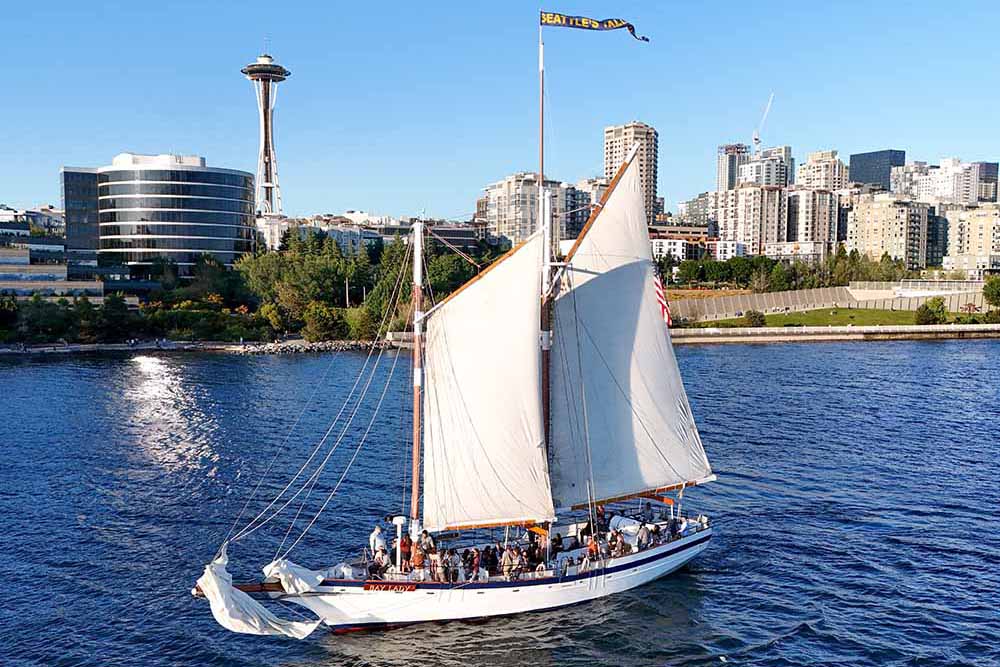
For something with a different character entirely, the Bay Lady, a traditional wooden tall ship with canvas sails, runs day and evening sails from Elliott Bay throughout the summer. You board at the pier, hear the rigging go taut, and watch the skyline pull back as the boat clears the dock, the Olympic Mountains opening to the west and Mount Rainier rising above the city to the south. For visitors mapping out what to do between World Cup matches in Seattle and looking for something that earns its place in how you remember the week, a sail on the Bay Lady is that afternoon. Tickets and schedules at seattlesailingship.com.
Seattle in late June and early July is at its most generous, with days running past 9 PM and a quality of light that makes even ordinary afternoons feel like invitations. The tournament energy that builds through each match day doesn’t fully dissipate between them. It spreads out through the city, taking different shapes in different neighborhoods, finding its way into market alleys and neighborhood parades and corners of the waterfront that surprise you.
The water, in the end, is the most honest answer to what to do between World Cup matches in Seattle. The Bay Lady sails from Elliott Bay all summer, and what you see from out on the Sound is something that tends to stay with you: the skyline, the mountains, the particular quality of light on the water in the hour before sunset. seattlesailingship.com is the right place to start.
Book a sail with Seattle’s Tall Ship
If you have never experienced the thrill of sailing on our tall ship, there is no better time to try than now. With multiple sailing times and experiences available, our family-friendly harbor experiences are a must-do Seattle activity. Join us today!