
Seattle Waterfront Guide: World Cup 2026
Parks, Piers, and Everything Along the Shore
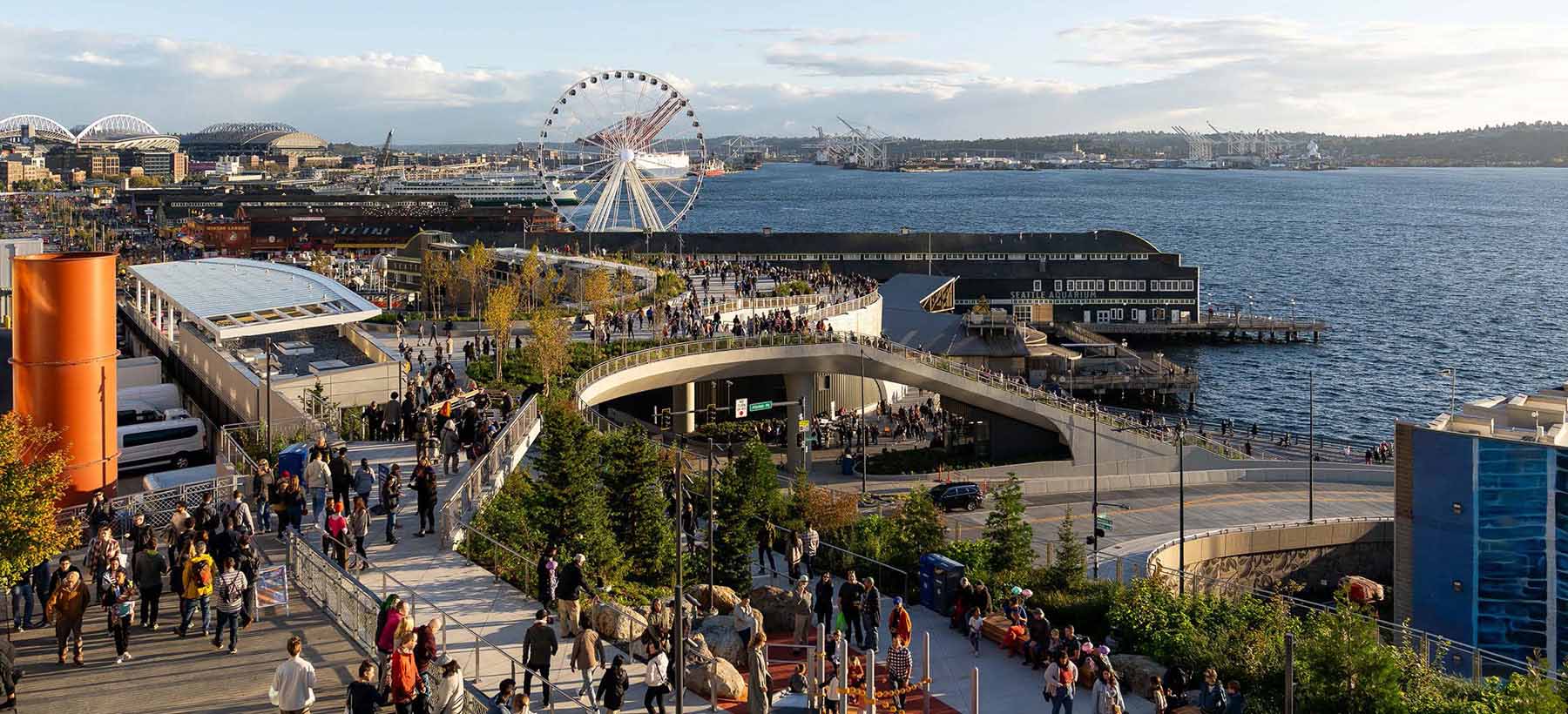
For most of its history, Seattle’s shoreline was separated from the city above it by a concrete viaduct carrying highway traffic along the water’s edge. That structure is gone now. The redesigned promenade along Alaskan Way runs from Pioneer Square north to Belltown, connecting parks, piers, and public spaces that were previously hidden. A reimagined waterfront park, a newly expanded aquarium, free cultural events at Pier 62, and tall ship sails from Elliott Bay aboard Seattle’s Tall Ship now line the shore. For visitors arriving to experience the Seattle waterfront during World Cup 2026, the transformation is worth understanding: you’re arriving at a waterfront the city has been building toward for years.
The timing works in other ways too. Waterfront Park has been designated an official fan celebration zone for the tournament. The Seattle Aquarium opened a major new Ocean Pavilion in 2024. Pier 62, right next door, runs free cultural events and live performances through the summer. And the full walk north to the Olympic Sculpture Park is open, connected, and worth the time.
What follows is a guide to what’s actually here: the fan zone, the piers, where to eat, and the walk that ties it all together.
Waterfront Park and the Fan Celebration Zone
Friends of Waterfront Park has managed the new park since it opened, and during the World Cup they’ve activated it as part of the official Unity Loop fan celebration circuit. The Seattle waterfront World Cup 2026 fan zone at Waterfront Park is one of four free, public viewing locations distributed across the city, and the only one that puts you directly on the water’s edge.
The programming runs daily from June 11 through Seattle’s final tournament match on July 6. Live match broadcasts, food vendors, and public art installations fill the open spaces throughout the tournament. The cultural programming is curated through the Festál series, which draws on Seattle’s international communities for performances, markets, and events that reflect the tournament’s global reach.
The park’s design suits this kind of use. Wide lawns, generous promenade space, and unobstructed sight lines toward Elliott Bay give it a different character from the indoor fan zones at Pacific Place and Victory Hall. On a clear day in June or July, the Olympic Mountains hold the western horizon and the waterfront opens up in a way that’s specific to this city.
The park connects naturally to the rest of the shoreline. A short walk north leads to Pier 62 and the aquarium. The new Overlook Walk hillclimb runs up to Pike Place Market from a point along the promenade. South, the path continues toward Pioneer Square. The fan zone is the anchor, but the waterfront on either side has its own pull.
For visitors who want a quieter alternative to the fan zone energy, the park is built for that too. Benches facing the water, views toward the ferry terminal and the bay, and the particular stillness of being near open water in the middle of a busy summer: it’s available here even at the height of the tournament.
Full details on programming and Unity Loop venues at seattlefwc26.org.
The Seattle Aquarium and Pier 62
A short walk north of Waterfront Park, two of the waterfront’s most useful stops sit next to each other. The Seattle Aquarium and Pier 62 are close enough to visit in sequence and different enough to hold a full half-day.
The aquarium’s newest addition is its Ocean Pavilion, which opened in August 2024. The building announces itself from the promenade: its exterior is clad in yellow cedar panels that mimic driftwood, a deliberate reference to the shoreline it sits on. Inside, the focus is the Coral Triangle, a region of the Pacific near Indonesia that holds some of the most concentrated marine biodiversity on Earth. The centerpiece is a 325,000-gallon tank housing sharks, rays, and the layered ecosystem of a tropical reef. It’s the kind of room that earns more time than you planned for it.
The Ocean Pavilion shifted the aquarium’s scope. What was primarily a Pacific Northwest natural history collection became something larger: a study of the broader ocean and its pressures. Plan at least 90 minutes if the shark tank gets hold of you, which it tends to.

Pier 62, immediately adjacent, operates differently. Nearly 40,000 square feet of open waterfront space, free to enter and programmed by Friends of Waterfront Park, the pier hosts live performances, cultural markets, wellness classes, and community events through the summer. The programming during the World Cup period leans into the international character of the tournament.
The pairing works. One paid attraction with real depth, and an adjacent free outdoor space that keeps the afternoon in motion. Between them, the aquarium and Pier 62 cover the full range of what a waterfront visit can be: inside looking at the ocean through glass, and outside looking at Elliott Bay with nothing between you and the water.
Eating, Drinking, and the Global Gateway
The renovated waterfront has made eating along the shore a different proposition. Restaurants along Alaskan Way now open onto a proper pedestrian promenade rather than a highway shoulder, and the slower pace of the waterfront encourages stopping rather than passing through.
Ivar’s Acres of Clams is the institution. Open since 1938 and still occupying Pier 54, it’s as embedded in the waterfront’s identity as the ferry terminal or the aquarium. The outdoor seating faces the water directly. The salmon chowder and Dungeness crab are exactly what they should be, and finding a seat during the World Cup, surrounded by people from a dozen countries eating Pacific Northwest seafood in view of Elliott Bay, is one of those specific Seattle scenes worth building time around.
The Seattle Global Gateway initiative extends the food and culture dimension further along the promenade. The program connects visitors with Seattle’s international communities through food experiences and cultural events that map directly onto the tournament bracket. Walking the waterfront and finding vendors and performances representing countries competing at Lumen Field that same week is a version of the Seattle waterfront World Cup 2026 experience that requires no ticket and no advance planning.
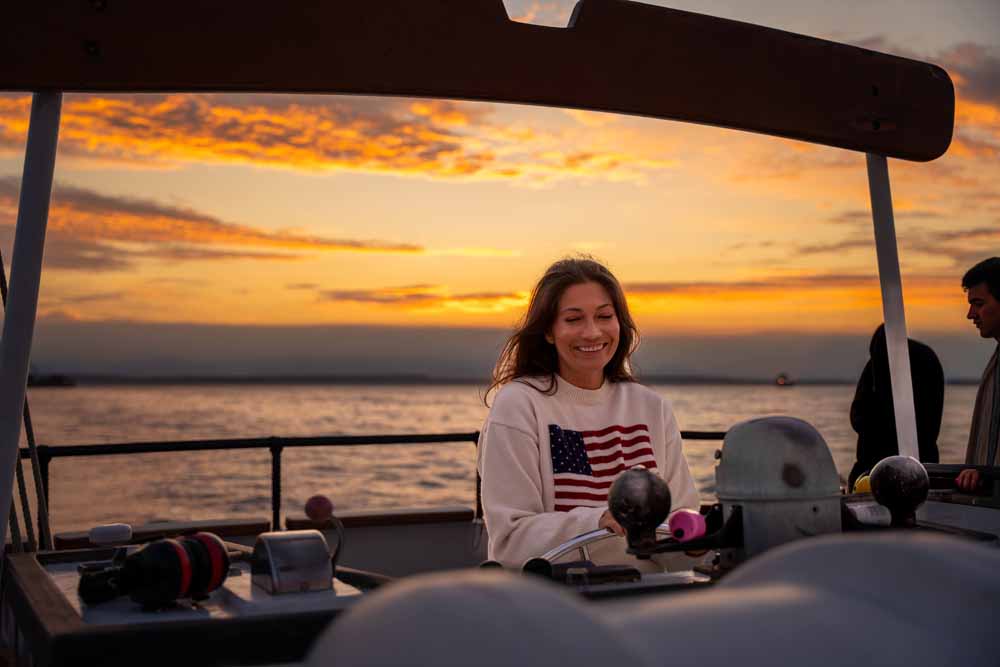
For visitors who want to take the afternoon out onto the water, Seattle’s Tall Ship runs day and evening sails from Elliott Bay through the summer, aboard the Bay Lady, a traditional wooden tall ship with canvas sails. A glass of local wine, the city arranged behind the sails, the tournament carrying on somewhere in the city behind you: it’s the version of a waterfront afternoon that most visitors don’t find, and the one most likely to be what they remember.
Walking North: The Olympic Sculpture Park and the Full Shore
The waterfront walk extends north of Pier 62 along a connected path that changes character as it goes. Bell Street Park marks a transition from the commercial waterfront to a quieter stretch. Ten minutes further on, the path arrives at the Olympic Sculpture Park.
The park is operated by the Seattle Art Museum and free to enter, open 365 days a year from before sunrise to after sunset. Its permanent collection includes monumental works by Alexander Calder, Richard Serra, and Mark di Suvero, installed across nine acres that slope from the Belltown streetfront down to the shoreline. Richard Serra’s “Wake,” six steel fins arranged in a line along the water’s edge, is the kind of work that registers entirely differently when you’re standing next to it than it does in photographs.
From the sculpture park, the views extend across Elliott Bay toward the Olympic Peninsula. On a clear day, the mountain range fills the western horizon. The Space Needle sits behind you to the northeast. It’s a ten-minute walk from Pier 62, which is enough distance to change the register of an afternoon.

The full stretch from Waterfront Park south of the aquarium to the sculpture park at the north end covers roughly a mile of continuous shoreline. It passes the fan zone, the piers, the new promenade, and ends at one of the best free outdoor art spaces in the Pacific Northwest. A day spent walking it, with stops at the aquarium and a meal along the way, fills itself naturally without requiring much planning.
That’s what the Seattle waterfront World Cup 2026 has to offer: a full day’s worth of activity, most of it free, all of it connected, and none of it requiring a match ticket. The waterfront is the other reason to come to Seattle this summer.
The waterfront is where Seattle answered its biggest civic question: what does a city owe its shoreline? The viaduct came down, the promenade went in, and what replaced it is a stretch of open, connected, public space that draws people out toward the water in a way the old city never quite managed. The Seattle waterfront during World Cup 2026 is the first time the world gets to see the answer.
At the end of a long afternoon on the shore, with a full belly from one of Seattle’s famous eateries and the memory of a sunset felt from the deck of Seattle’s Tall Ship’s public sunset sail, what you’re left with is the particular satisfaction of a city that delivered on its promise. This is a waterfront worth coming back to. It was worth the wait.
Book a sail with Seattle’s Tall Ship
If you have never experienced the thrill of sailing on our tall ship, there is no better time to try than now. With multiple sailing times and experiences available, our family-friendly harbor experiences are a must-do Seattle activity. Join us today!