
Seattle World Cup 2026: The Best the City Has to Offer
The Seattle World Cup 2026 is bringing the world to the Pacific Northwest this summer. Six matches at Seattle Stadium, 750,000 visitors expected, and a city that’s been quietly ready for this moment for years. Lumen Field has a new name for the tournament, the waterfront has a new energy, and there’s a palpable sense that Seattle is showing up for this in the best possible way.
Seattle has always rewarded the curious traveler. Its waterfront stretches from Pioneer Square to the ferry terminals, its neighborhoods each carry a distinct character, and its food, culture, and natural beauty have drawn serious national attention for more than a decade. The World Cup brings more people to this city than ever before, but the things that make it worth visiting have been here all along.
A few hours between games or a full free day: either way, this city will meet you where you are. There’s a version of Seattle that the stadium alone won’t show you, and it’s the part worth going out of your way to find.
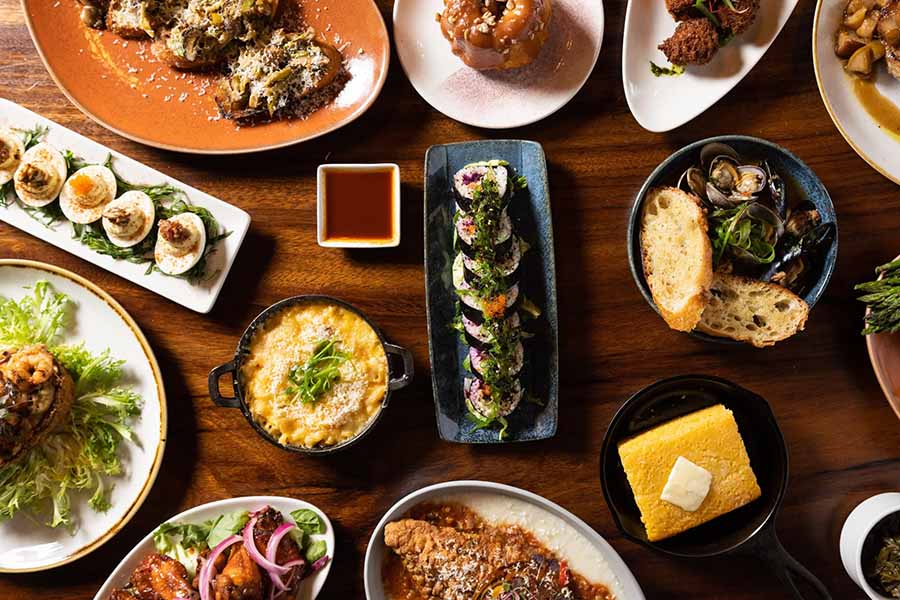
Where to Eat Between World Cup Matches
Seattle has always been a food city. The James Beard Foundation has recognized its chefs for decades, the Pacific seafood supply gives local kitchens an ingredient advantage that’s hard to match, and a culinary culture shaped by many different communities means the range of what’s on offer here is as broad and interesting as anywhere in the country. There’s no shortage of great places to eat this summer.
Our Top Pick
Chef Kristi Brown, James Beard-nominated and one of the most original voices in American cooking right now, has spent nearly thirty years cooking in Seattle. She calls her food “Seattle Soul”: Southern foundations stretched and woven with Asian, Filipino, East African, and Creole influences until they become something that belongs only here. Her restaurant, COMMUNION, sits in the Liberty Bank Building on East Union Street in Capitol Hill, a building with its own history as one of the first Black-owned financial institutions in the Pacific Northwest.
COMMUNION was built to serve the community around it, and that sense of belonging comes through in every plate. For a Seattle World Cup 2026 summer, when the city is hosting visitors from dozens of countries, it feels like exactly the right place to sit down. A tournament that brings together different nations and different ways of playing the game finds a culinary parallel in a kitchen that draws from many traditions to arrive somewhere entirely its own.
Brown started as a dishwasher in a small downtown café and built her reputation one dish at a time. The BBQ shrimp and grits and jerk chicken are benchmarks worth ordering if they’re on the menu, but the kitchen shifts with the season and whatever the team is proud of that evening will be worth trusting. The room is warm and unhurried, which matters in a city that gets frantic during tournament weeks. Capitol Hill also puts you steps from some of the city’s best bars when dinner wraps up. Get a reservation before you land; walk-ins during the tournament are possible but optimistic.
Honorable Mentions
- Un Bien in Greenwood has built its entire reputation around a single sandwich: slow-roasted Caribbean-spiced pork shoulder on a toasted baguette. Order at the counter, wait a few minutes, and eat one of the best things Seattle has to offer for under twenty dollars.
- Sushi Kashiba at Pike Place Market puts you in the hands of Chef Shiro Kashiba, who trained under Jiro Ono in Tokyo and has been making quiet, precise nigiri in Seattle for decades. The omakase is the move.
- The Walrus and the Carpenter in Ballard is one of the best oyster bars in the country. Fresh Pacific oysters, a thoughtful wine list, and a room that always feels like the right place to be. Book ahead; it fills up fast.
- Canlis, above Lake Union in its mid-century modern landmark, is the right call for a proper occasion. A tasting menu, sweeping views, and an experience that earns every penny.
The Best Indoor Experience Between Matches
Seattle’s cultural offerings are easy to underestimate from the outside, but the city has world-class museums, a thriving arts scene, and more than enough to fill a rainy afternoon. And in Seattle, the afternoon may well be rainy. Of all the indoor options worth your time this summer, one sits clearly at the top.
Our Top Pick
Known as MoPOP, the Museum of Pop Culture sits at the base of Seattle Center in a building designed by Frank Gehry: crumpled steel panels in silver, burgundy, and gold that look like a guitar disassembled and rebuilt as architecture. It makes an impression before you’ve bought a ticket. Inside, 80,000 artifacts spread across more than ten permanent exhibitions covering music, film, fashion, gaming, and science fiction. The range is wide enough that almost anyone walks out having found something they didn’t expect to care about as much as they did.
For international visitors, the Jimi Hendrix connection is worth knowing. Hendrix was born in Seattle, and the Wild Blue Angel exhibition at MoPOP covers his years in Europe from 1966 to 1970, the period when he was reshaping what popular music could be. For visitors coming from London, Paris, or Stockholm, cities where much of his reputation was first built, the Seattle origin story is something to sit with for an afternoon.
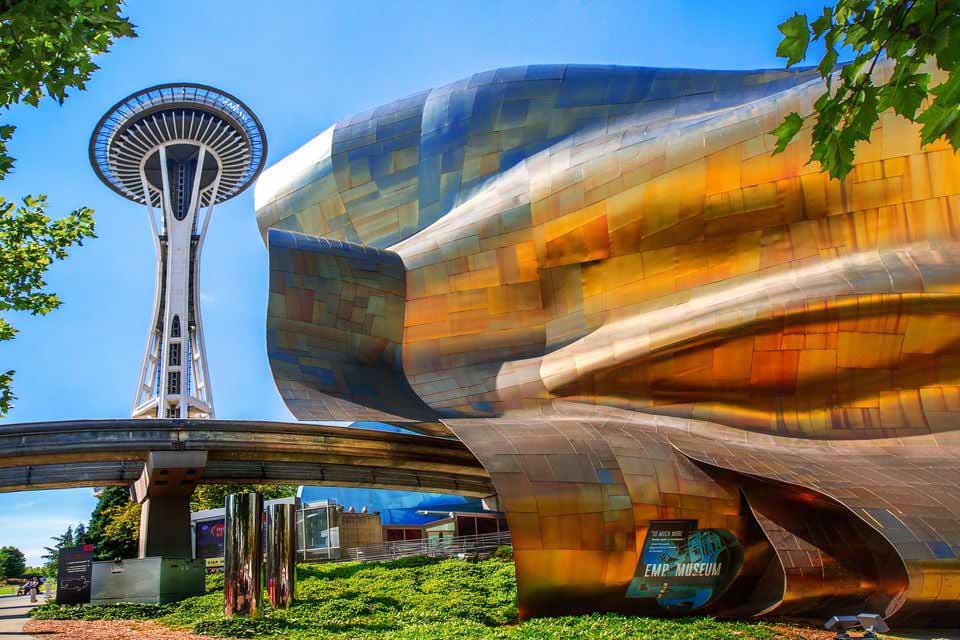
What sets MoPOP apart from other great Seattle museums is how it handles its material. This is not a place that keeps things behind glass. You can step into a recording booth, pick up an instrument, and move through exhibitions that feel more like environments than displays. The “Beats + Rhymes” exhibition on the collective narrative of hip-hop is one of the most considered treatments of the genre in any museum in the country, and it’s running now. Add the Seattle World Cup 2026 timing and MoPOP’s location at Seattle Center, which becomes a natural gathering point for off-pitch energy throughout the tournament, and this one is an easy call. Open daily from 10 a.m.; book tickets ahead on match days.
Honorable Mentions
- Chihuly Garden and Glass sits next door at Seattle Center. Dale Chihuly’s monumental glass sculptures fill a conservatory and outdoor garden, and there’s nothing else quite like it in the world.
- Seattle Art Museum anchors its collection with an exceptional Pacific Northwest Coast Native art gallery alongside first-rate rotating exhibitions. A short walk from the waterfront and a natural pairing with a morning at Pike Place Market.
- The Museum of History and Industry at Lake Union Park tells the story of how Seattle became Seattle, in a compact and well-curated two hours.
The Best Outdoor Attractions
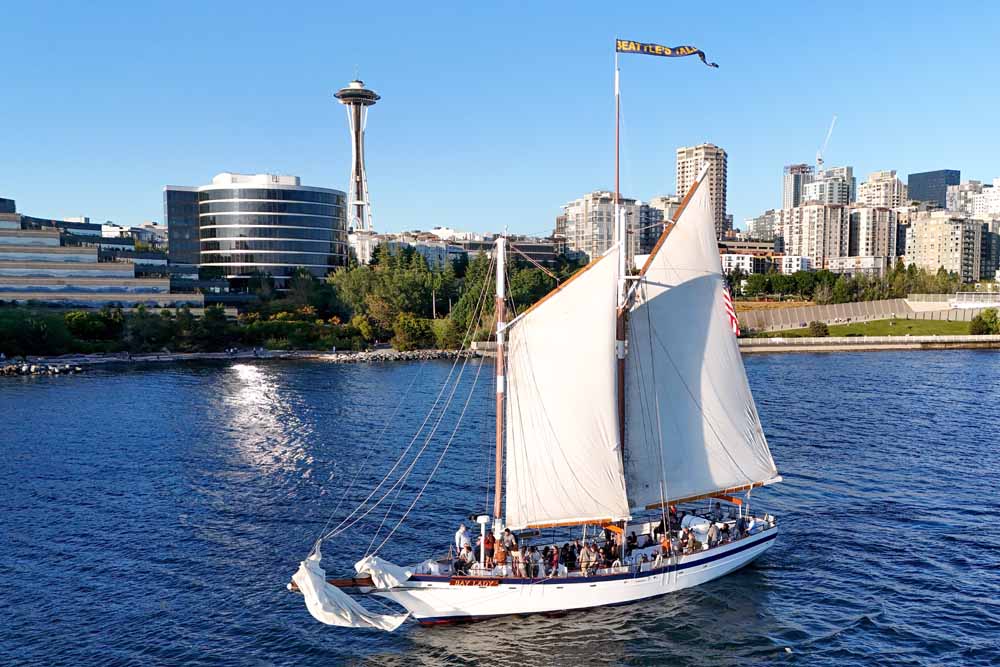
Seattle was built on the water, and there are few better ways to understand this city than by getting out on it. Elliott Bay sits at the foot of downtown, the ferries run day and night, and the waterfront has been at the center of everything here since the city’s earliest days. If you want to see Seattle the way it was meant to be seen, step off the dock and sail.
Our Top Pick
An afternoon or sunset sail with Seattle’s Tall Ship is the outdoor experience in Seattle that has no real equivalent. The Bay Lady, Seattle’s Tall Ship’s twin-masted schooner, is a traditional wooden tall ship with canvas sails that sets out from the central waterfront on Elliott Bay. Once you’re on the water, the city rearranges itself: the skyline, the Space Needle, the hills stacked behind them, all sitting in a frame that no street-level view can match.
On clear days, the Olympic Mountains hold snow to the west well into June. Mount Rainier rises to the south with a scale that reminds you how close Seattle sits to something vast and wild. There’s no narration, no scripted tour. The canvas fills, the rigging settles into its rhythm, and the noise of the city falls away behind you.
For Seattle World Cup 2026 visitors who’ve spent the past few days in crowds, navigating a tournament, this is the complete counterpoint to all of it. The city looks entirely different from out here, and it’s a view worth making time for.
What makes a sail with Seattle’s Tall Ship the standout outdoor experience isn’t just the view, as good as it is. It’s the shift in pace. The tournament brings an intensity to Seattle that’s part of the appeal, but by day two or three it’s easy to feel like you haven’t actually seen the place. Being out on the water under open canvas, with the mountains behind you and the city in front of you, has a way of putting everything back in proportion.
Honorable Mentions
- Northwest Outdoor Center on Lake Union rents kayaks by the hour, placing you on the water among houseboats and seaplanes with the downtown skyline behind you.
- Discovery Park in Magnolia offers 534 acres of old-growth forest, sea cliffs, and a beach that most visitors never find. It’s the city’s best-kept escape hatch and worth a full morning.
- Alki Beach in West Seattle gives you a sandy stretch with an unobstructed view back across the bay to downtown at its most photogenic.
Neighborhoods to Explore Between World Cup Matches
Seattle’s neighborhoods are each worth exploring on their own terms, and every part of this city rewards a different kind of traveler. Capitol Hill runs deep with restaurants and nightlife. Ballard carries its Scandinavian roots with quiet pride. But for World Cup visitors this summer, one neighborhood stands in a category of its own.
Our Top Pick
Pioneer Square, Seattle’s oldest neighborhood, was built twice. The first version burned in 1889. The Great Seattle Fire reduced most of the original city to ash in a single afternoon, and the rebuilt city rose one story higher, leaving the original street level preserved underground. That buried city is still down there, accessible via Bill Speidel’s Underground Tour, which moves through subterranean passages beneath the streets and tells the story of a city that rebuilt itself from nothing.
On match days, the neighborhood takes on a different kind of energy entirely. The city closes South Jackson Street to traffic and turns the square into a pedestrian fan zone: a stage, an all-ages beer garden, and a 20-by-15-foot LED screen broadcasting every game from four hours before kickoff. Steps away, Victory Hall runs daily World Cup programming with a 23-foot indoor screen, live DJs, and food trucks throughout the tournament. Steps from Seattle Stadium, Pioneer Square is where the match-day energy concentrates.
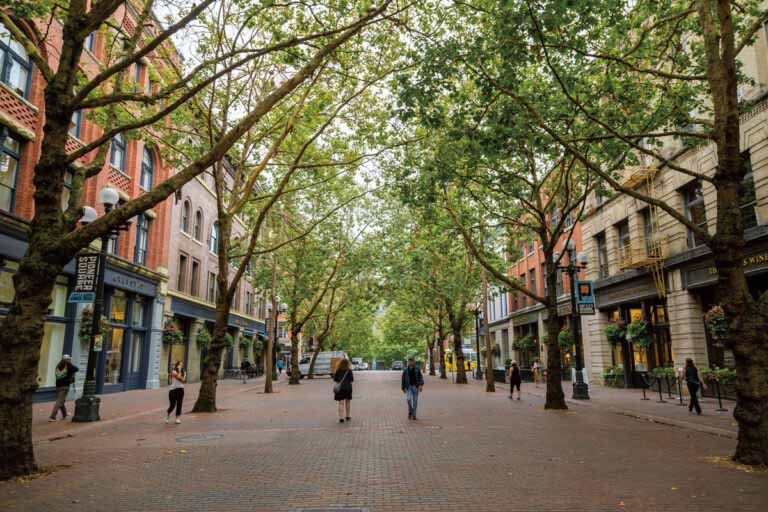
What makes Pioneer Square worth recommending beyond the fan zone is that it was already a great neighborhood before the Seattle World Cup 2026 came to town. The Romanesque Revival architecture rebuilt after the 1889 fire has aged beautifully. Independent galleries line the streets. The Elliott Bay Book Company anchors one end of the neighborhood with floor-to-ceiling shelves and worn wooden floors. The bars along First Avenue South have been there long enough to feel like they belong. Spend a match day here and you get both: the tournament energy and the city underneath it.
Honorable Mentions
- Capitol Hill is where Seattle’s restaurant and nightlife culture runs deepest. It’s the most concentrated stretch of independent dining and bars in the city, and where COMMUNION calls home.
- Ballard, further north, has Scandinavian roots, the Hiram Chittenden Locks, a Sunday farmers market, and some of the city’s best newer restaurants in a calmer register.
- Fremont, across the Lake Washington Ship Canal, has built its reputation around public art, an outdoor Sunday market, and an unhurried pace that makes a useful counterpoint to tournament energy.
The World Cup doesn’t just bring a tournament to Seattle. It brings the world to one of the most compelling cities in North America at the peak of summer, when the days are long, the light stays golden well into the evening, and the energy on the streets feels like something this city hasn’t experienced before. It’s the kind of moment that doesn’t come twice, and the kind of city that knows what to do with one.
Beyond the stadium, Seattle rewards the people who make time for it. The best things here have a way of revealing themselves slowly. A meal that stretches into an unexpectedly long evening. A walk that turns a corner into something you weren’t looking for. An afternoon that refuses to end because the city keeps offering more. This is a city worth being curious about, and a summer worth giving over to fully. When you’re ready to see it from a different angle, Seattle’s Tall Ship sails from the waterfront throughout the tournament. Visit seattlesailingship.com to book your sail. The rest, this city will take care of.