
Seattle Sailing History | The Mosquito Fleet
Seattle sailing history is full of grand names and famous ships, but the story that shaped daily life here for nearly a hundred years belongs to something far humbler: a scattered, ever-shifting swarm of small boats that everyone simply called the Mosquito Fleet.
At its height, several hundred independently owned steamers, sloops, and launches crisscrossed the Sound, darting between islands and inlets the way buses now run down city streets. They carried mail, milk, lumber, and neighbors. They had no shared schedule, no central office, and often no name anyone remembers today. Just a captain, a whistle, and a route he’d run so many times he could find the dock in the fog.
It’s a strange thing to realize how recently this was normal. The bridges, ferries, and highways that now stitch the region together are barely a century old. Before them, the water carried the region’s traffic, its mail, its neighbors, its commerce. This is the story of the fleet that carried it all.
A Region Built Like an Archipelago
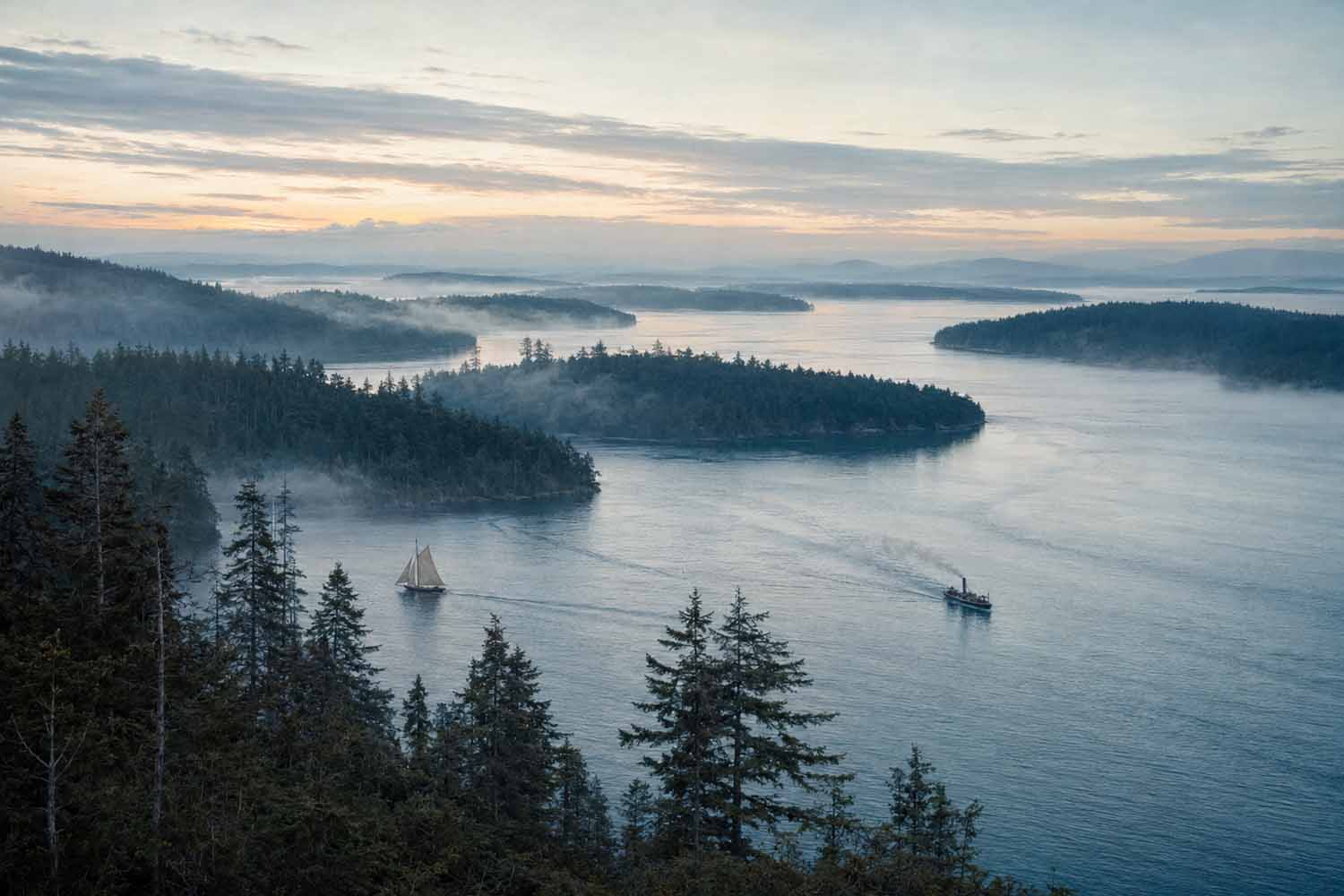
Look at a map of Puget Sound and the problem becomes obvious. Land here doesn’t stretch out in tidy grids; it splinters into peninsulas, islands, and long fingers of water that double back on themselves. Vashon, Bainbridge, Whidbey. Kitsap’s twisting shoreline. Towns that sit only a few miles apart as the gull flies could be half a day’s ride apart by wagon, if a road existed at all.
For the settlers, loggers, and farmers who arrived through the mid-1800s, that geography made one thing clear early on: the fastest way between two points around here rarely followed a road. More often, it followed the water.
So that’s where the routes went. Small operators bought or built modest wooden boats, first under sail and oar, then increasingly under steam, and started running between the young settlements dotting the Sound’s edges: Seattle, Tacoma, Olympia, and the dozens of mill towns, logging camps, and farm landings in between.
There was no grand plan behind any of it. Each route existed because somebody saw a need, a mill that needed its lumber moved, a farm that needed its produce in the city market by morning, and put a boat on the water to fill it.
Four Hundred Boats, and No Two Alike
By the time the fleet reached its peak in the early 1900s, hundreds of these small steamers were working the Sound, spread across dozens of overlapping routes. The nickname came easily: from a distance, all those boats buzzing between docks looked exactly like a swarm of mosquitoes skimming the water.
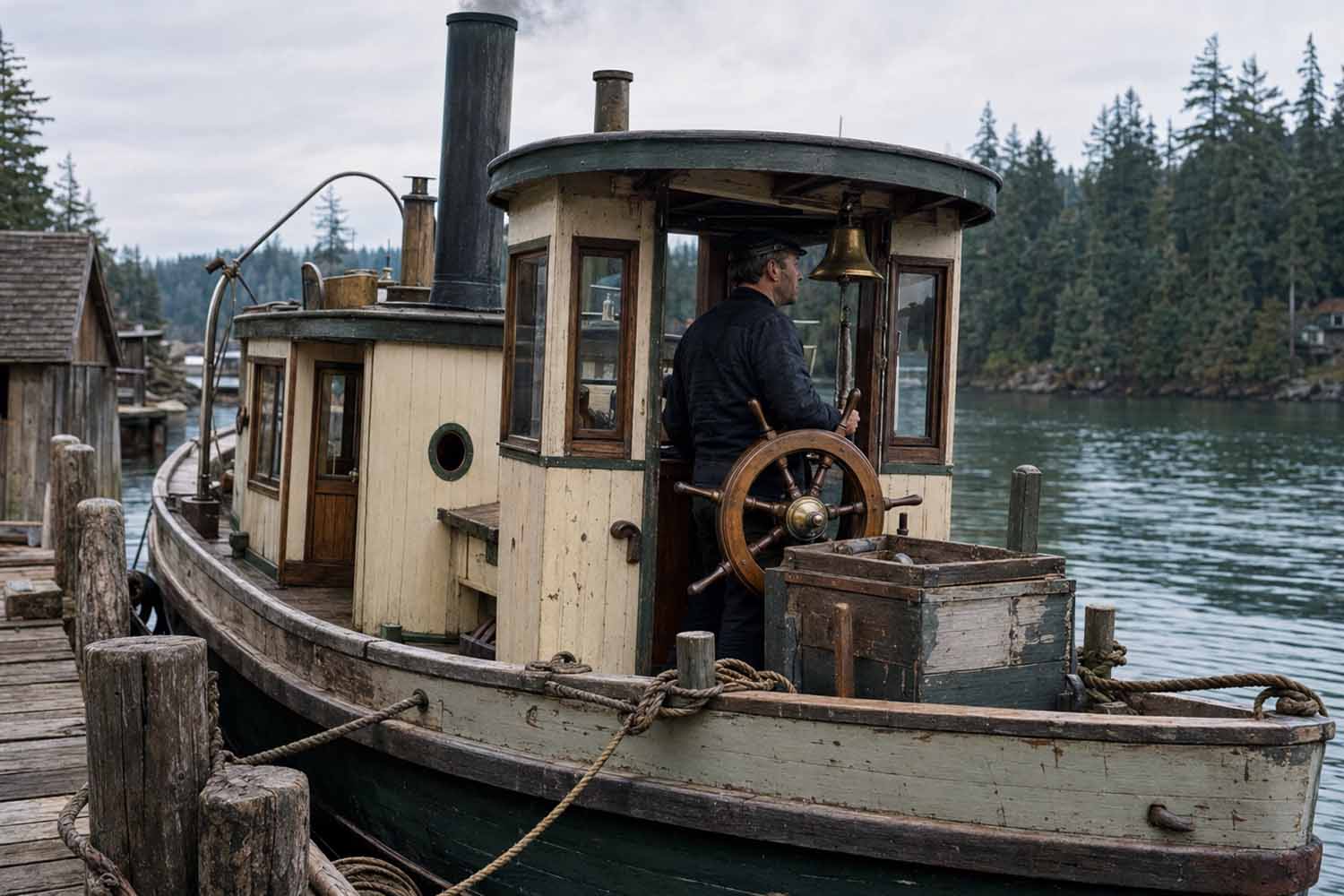
Unlike a modern ferry system, there was nothing uniform about it. Every boat belonged to its own owner, usually a single captain who’d built or bought the thing himself and ran it as his own small business. Some vessels were barely more than open launches; others were sturdy little steamers with a cabin and a whistle distinctive enough that dockside regulars could tell which boat was coming before it rounded the point.
That independence bred real competition. Captains raced each other for the mail contract, for the first crack at a dock full of waiting passengers, for the reputation of running the fastest, most reliable route on their stretch of water. It made for a fleet with more personality than any timetable could capture, part transportation system and part running rivalry.
The Rhythm of Daily Life on the Water
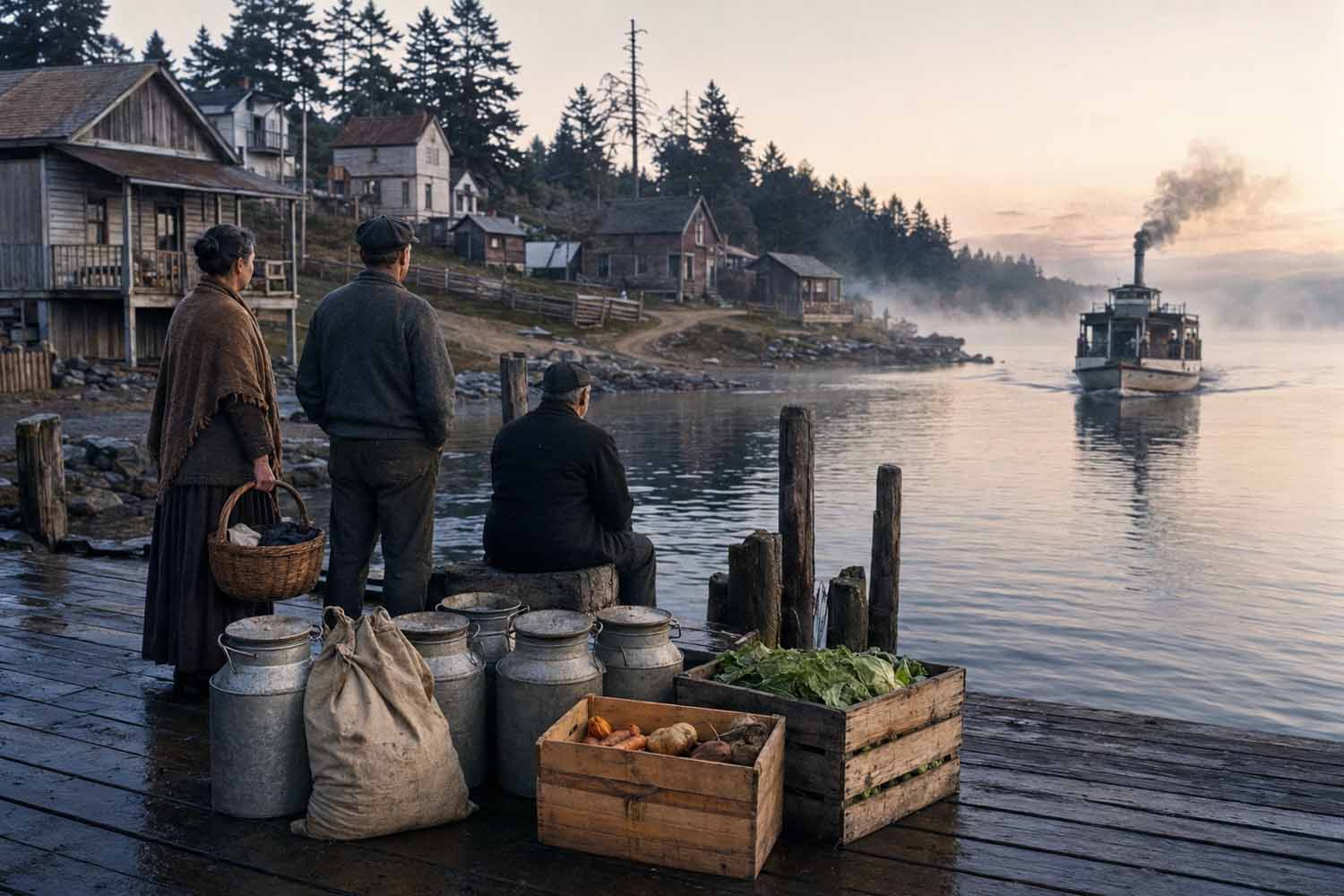
For the communities these boats served, the fleet was infrastructure, and life ran on its schedule. Farmers had milk cans lined up on the dock before sunrise, timed to the boat that would carry them into the city market that morning. Mail, groceries, and news of the outside world arrived the same way, carried by whoever’s boat happened to be running that route that day.
Missing the boat meant missing the day. There was no next bus in twenty minutes. If the morning steamer had already come and gone, whatever you needed in town simply waited until tomorrow, and whatever news was coming your way waited with it.
That daily rhythm shaped the towns themselves. Waterfront communities across the Sound grew up facing their docks, much like a Main Street town grows up facing its road. Front doors, general stores, and post offices clustered near the landing, since that was where the day’s connection to everywhere else arrived.
How Bridges and Highways Ended an Era
The fleet’s decline came fast, once it came. As car ownership grew through the 1920s and 30s and the region began pouring concrete for roads and bridges, the advantage the Mosquito Fleet had always held, being the only practical way across the water, started to disappear.
A car and a bridge could do, on a fixed schedule and without a captain’s judgment call, what dozens of small independent boats used to do one relationship at a time. State and county governments began consolidating ferry service into larger, standardized routes, eventually forming the public ferry system that still crosses the Sound today.
The hundreds of small, independently run boats couldn’t compete with fixed schedules, larger capacity, and public subsidy. One by one, routes folded, boats were sold off or scrapped, and captains who’d run the same stretch of water for decades tied up for the last time.
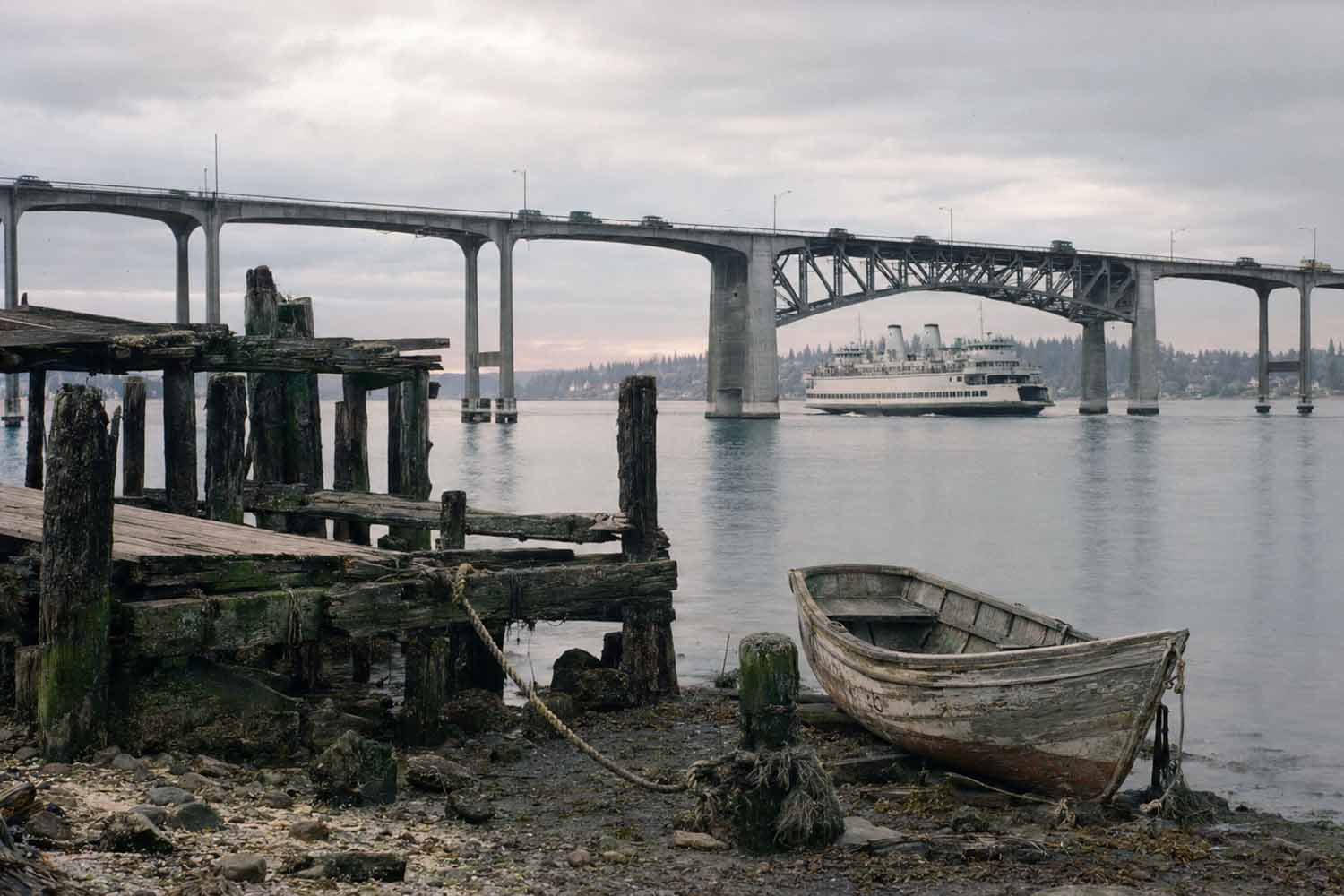
By the middle of the century, the fleet that had once defined how this region moved was almost entirely gone, remembered mostly in old dock pilings, town names, and photographs of boats nobody today could name.
What’s easy to miss in that story is what actually got lost along with it: a way of experiencing this water up close, slow enough to notice its temperament change day to day. Seattle sailing history remembers the Mosquito Fleet for what it did, but it’s worth remembering what it felt like, too.
Nowadays, if you’re looking to capture the feeling, you can book a Seattle sailing tour with Seattle’s Tall Ship. Aboard their schooner “Bay Lady,” the engine goes quiet not long after leaving the dock, and the only thing moving you across Elliott Bay is the same wind that once filled sails long before steam took over the Sound. Guests are welcome to help raise the canvas themselves and feel the boat catch the breeze the old-fashioned way.
It’s a chance to feel, for a couple of hours, the Sound the way it’s been felt for longer than any bridge has stood. Come aboard and see for yourself.