
Seattle Waterfront History
The Denny Regrade: How Seattle’s waterfront was forever reshaped
Seattle waterfront history isn’t only a story about ships and docks. One of its strangest chapters played out uphill, when the city spent three decades washing an entire hill into the harbor.
The hill in question sat between downtown and Queen Anne, and it was a serious obstacle. At roughly 220 feet high, Denny Hill blocked the natural path of growth north out of the business district, and getting a wagon, or later a streetcar, over it was no small feat.
Solving that problem took five separate construction projects and more than thirty years. All that displaced earth had to go somewhere, and most of it ended up in the harbor itself, quietly reshaping the waterfront that’s still there today.
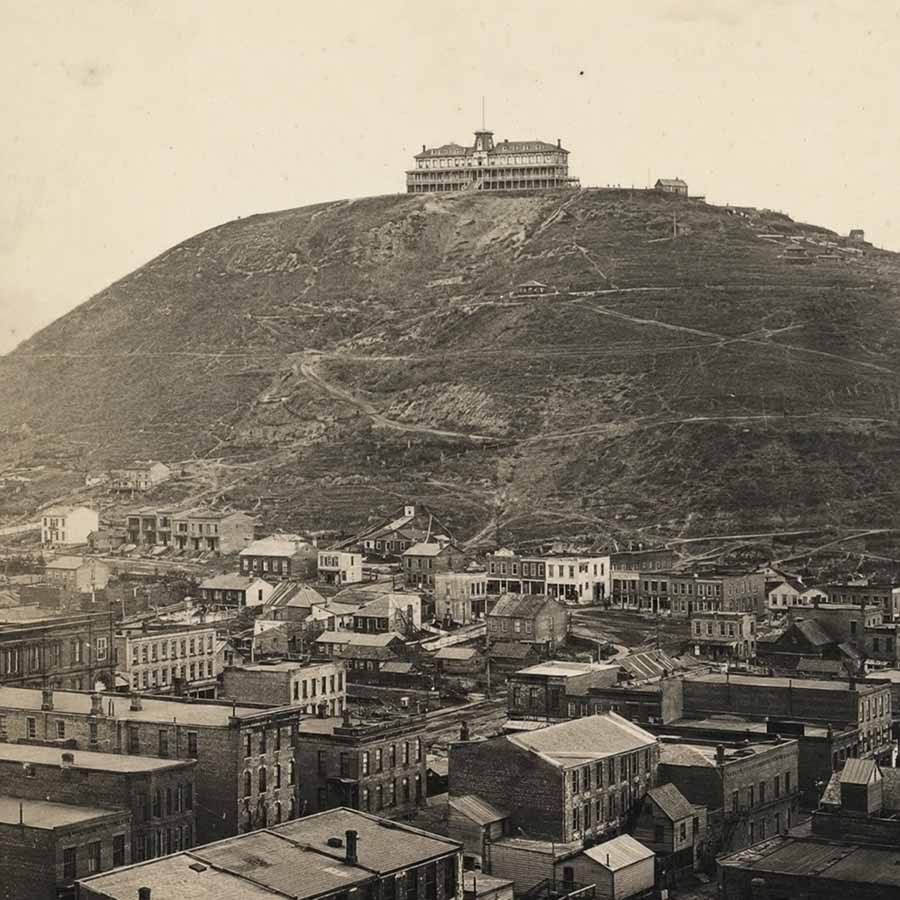
A City Stuck in a Pit
Reginald H. Thomson became Seattle’s city engineer in 1892, inheriting a downtown he considered boxed in by its own topography. He later described the city plainly: it was “in a pit,” and he meant to change that.
Denny Hill was the main obstacle standing in his way. At 220 feet, it sat directly between the growing business district and Queen Anne to the north, and its steep grade made regular commerce difficult. Early maps show the hill running from a low point near Thomas Street south to a summit near 4th and Blanchard, with a second high point rising close to 100 feet on its south side alone.
To Thomson and the city’s business boosters, the fix seemed obvious. A flat, regularly gridded downtown would let commerce spread freely in every direction. A steep, irregular hill in the middle of that grid simply didn’t fit the plan. It was a decision that would eventually rewrite a full stretch of Seattle waterfront history.
Washing a Hill Into the Sea
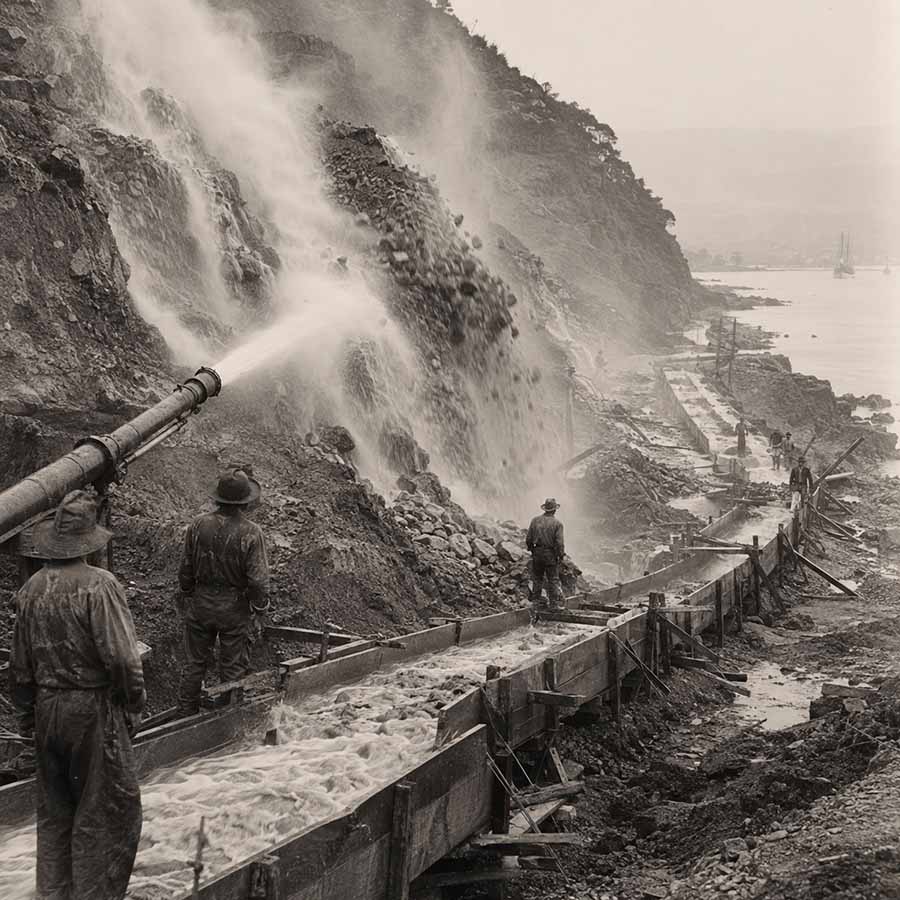
Rather than trucking the hill away load by load, engineers used a technique borrowed from Klondike gold mining. Powerful water cannons, nicknamed “giants,” blasted the hillside apart, and the resulting slurry was funneled through pipes and wooden flumes down toward the harbor.
The work stretched across five separate regrades between 1897 and 1930, each one taking another bite out of the hill. The fourth and largest alone removed more than five million cubic yards of material over roughly two and a half years.
Along the way, the project left behind one of the more curious images in Seattle history. By 1910, six isolated mounds of dirt still stood above the newly flattened land, each with a house perched on top, giving rise to a popular belief that stubborn owners had refused to cooperate out of spite. The truth was more ordinary. Most simply hadn’t yet been able to afford the cost of having their own property lowered, and one owner was off in the Klondike chasing gold when the paperwork came due. Every mound came down once its owner could arrange it, the last of them gone by early 1911. It’s one of the stranger footnotes in Seattle waterfront history, a compromise driven by paperwork rather than stubbornness.
Where the Hill Ended Up
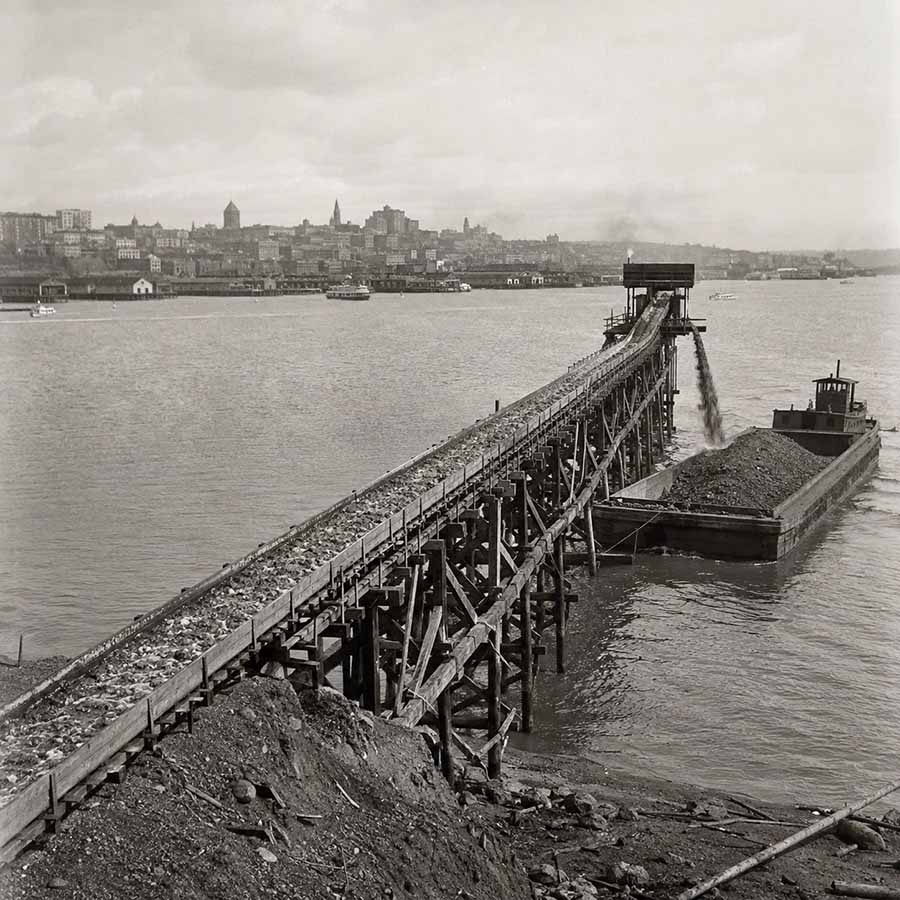
All that sluiced material had a destination: Elliott Bay. Tunnels and flumes carried the slurry straight to the water, and by the height of the fourth regrade, one flume stretched 1,200 feet out into the bay on pilings driven through water 200 feet deep. So much sediment poured into the harbor at once that fishers complained the water had turned too cloudy for cod to stay near the docks.
The final regrade, completed in 1929 and 1930, used a different method entirely. Electric power shovels fed a mile of conveyor belt, which loaded dirt onto self-dumping wooden scows engineered to flip themselves open, empty roughly 400 cubic yards of fill into the bay within minutes, and head back for more.
By the time the project ended, more than eleven million cubic yards of Denny Hill had been moved into the water and used as fill. That material helped build new land along Elliott Bay’s edge, including fill that went into what became today’s central waterfront and material that helped form Harbor Island at the mouth of the Duwamish River. Both are still there today, a permanent chapter of Seattle waterfront history poured directly from Denny Hill itself.
The Flat City That Followed
On December 10, 1930, Seattle’s mayor climbed into one of the electric shovels himself and personally dumped the last of Denny Hill into a waiting scow. A crowd gathered to watch, many of them former residents of the hill who had grown up there, and more than one account of the day mentions moist eyes among the onlookers.
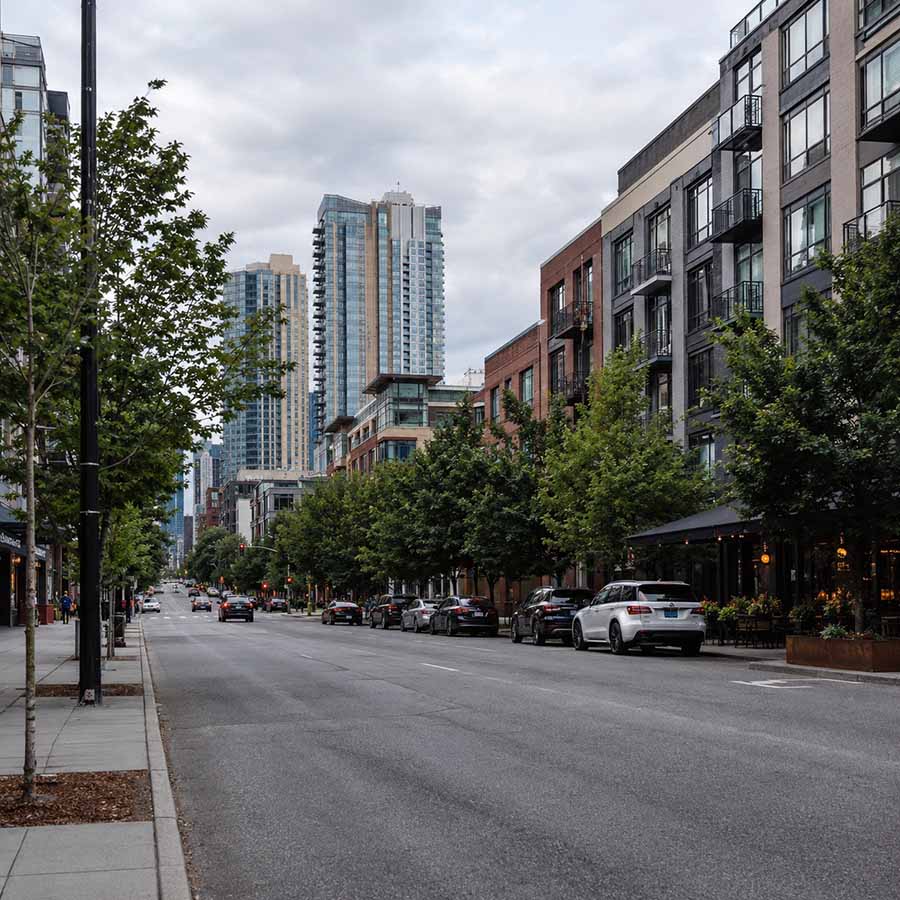
The flat blocks left behind became the neighborhood still known today as the Denny Regrade, now woven into Belltown and filled with apartments, restaurants, and nightlife where boarding houses and hotels once clung to a hillside.
Almost nothing above ground hints at what used to be there. A handful of old photographs, a few street names, and the noticeably flat terrain north of downtown are about all that remain to mark where a 220-foot hill once stood. It stands as one of the most literal transformations in Seattle waterfront history, a hill turned into a harbor and a harbor turned into a neighborhood.
Seattle waterfront history holds more stories like this than most people realize. The shoreline that looks like it has always simply been there is, in more than one stretch, quite literally built from a hill that no longer exists.
That shoreline is still there to sail along today, just with a different skyline behind it. Aboard Seattle’s Tall Ship’s schooner Bay Lady, guests glide out across Elliott Bay past a waterfront shaped in part by dirt that used to sit a mile inland, under wind instead of an engine, on water that has been quietly rearranged for more than a century.
Sail along Seattle’s waterfront on a Seattle’s Tall Ship sailing tour and experience it for yourself!