
Origin of Skid Row: Seattle’s Skid Road Story
Seattle loves to tell visitors that the origin of skid row sits right here, on a street called Yesler Way. It’s one of the city’s favorite pieces of local trivia, repeated on walking tours and bar trivia nights alike.
There really was a Skid Road here, a literal logging route down which timber was dragged to Henry Yesler’s waterfront sawmill in the 1850s. That part of the story checks out.
What’s more complicated is whether Seattle can actually prove it invented the phrase, or whether it just told the best version of a story that may have started somewhere else entirely.
The Road That Fed a Mill
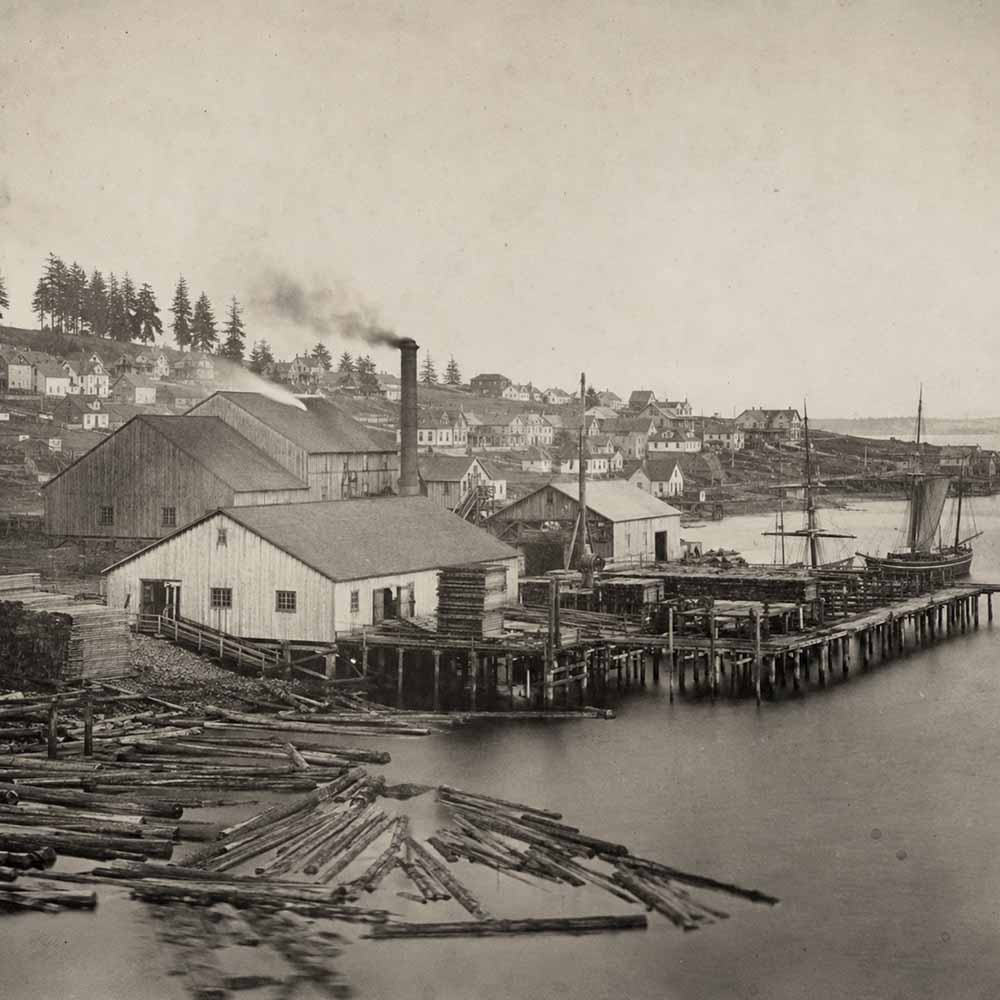
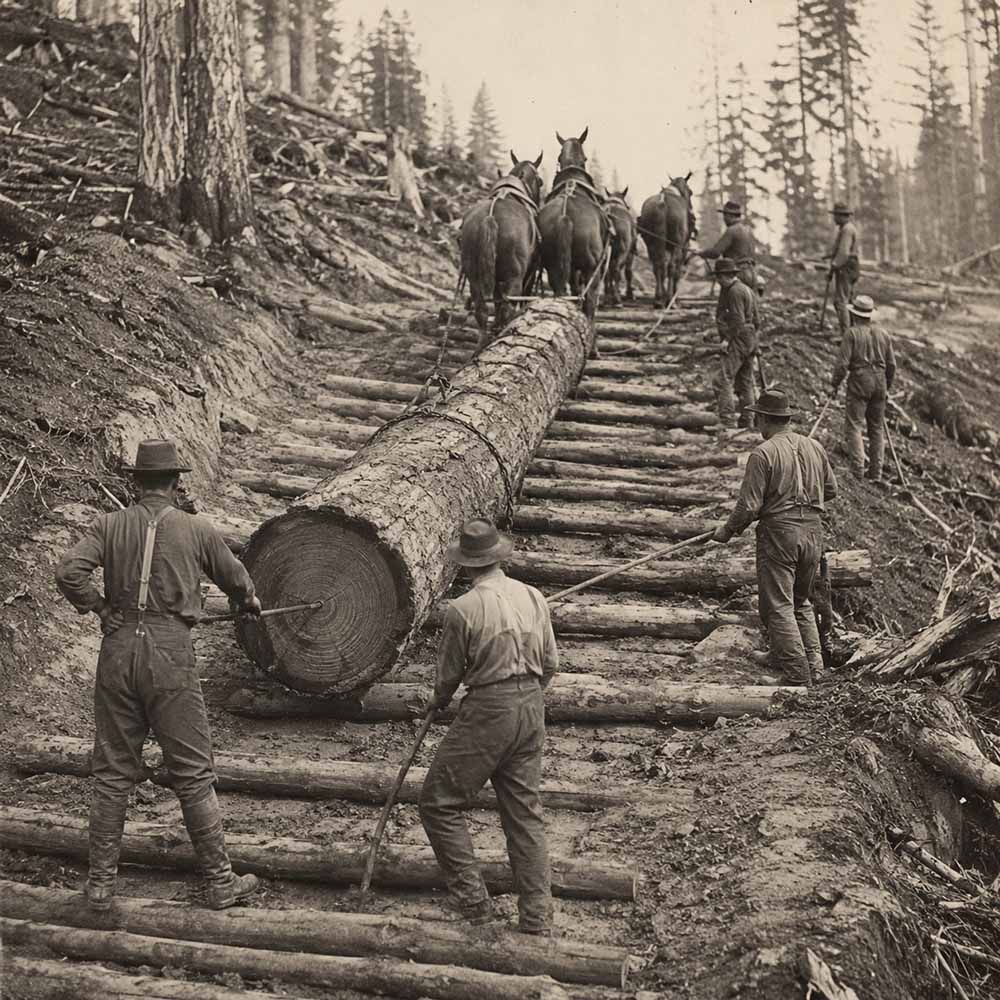
In 1852, settlers Carson Boren and David Maynard gave newly arrived Henry Yesler a strip of land roughly 500 feet wide, running from Elliott Bay up what’s now First Hill, so his steam sawmill could sit exactly where he needed it. That strip let Yesler and other settlers skid cut timber down the hillside to the water on greased logs, hauled by teams of oxen and horses.
Once the mill started running in 1853, finished lumber slid down a ramp straight into Elliott Bay, where it was rafted out to ships waiting offshore. Some of it traveled as far as Hawaii and Australia. A year later, Yesler built Seattle’s first wharf, extending the operation directly into the harbor.
The informal name for the route that fed all of this, Skid Road, first appeared on city maps as Mill Street before later being renamed Yesler Way. Long before anyone debated the origin of skid row, this stretch of road already had a name of its own.
A Nickname That Outgrew the Road
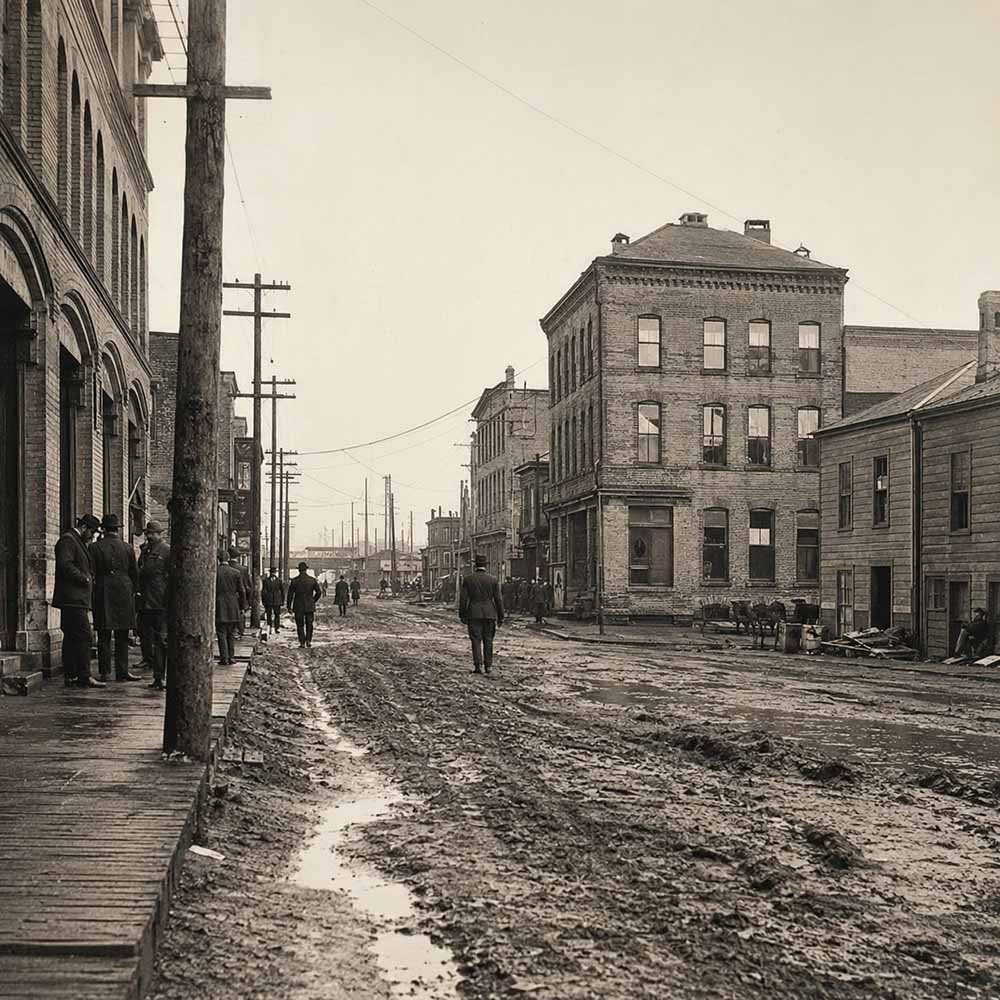
As Seattle grew, the name stuck to more than just the literal roadway. The blocks around the lower end of Yesler Way filled in with the loggers, day laborers, saloons, and cheap lodging houses that came with any frontier mill town, and the Skid Road nickname came to describe that whole rough district rather than just the log route itself.
The technique behind the name was straightforward: peeled logs laid crosswise and greased, forming a track that let cut timber slide with far less friction than dragging it over bare ground.
None of this was unique to Seattle. Loggers up and down the Pacific Northwest built their own skid roads wherever timber needed hauling to water or rail, and many of them used the same term for it. That regional overlap is part of what makes the origin of skid row so hard to pin to one city alone.
A Term Nobody Can Quite Pin Down
This is where the popular version of the story gets shakier. Etymologists have traced written use of “skid road” back to an 1875 citation from California, earlier than any confirmed reference tied to Seattle.
One of the earliest known uses of the term in its modern sense, describing a rough part of town rather than a literal logging track, turns up in the 1906 log of the steamship Columbia, recorded somewhere along the West Coast. Nothing ties that particular entry to Seattle specifically.
So while Seattle’s own Skid Road was certainly real, and the mill town culture that grew up around it matched the reputation the phrase would later carry, there’s no solid documentary proof it was the specific place that launched the word into wider use. By the 1930s, during the Great Depression, “Skid Row,” the newer spelling, had become a generic term nationwide, describing any city’s rundown, transient district, Seattle or otherwise. That gap in the record is exactly why the origin of skid row remains more legend than proven fact.
How Seattle Claimed the Legend Anyway
What actually cemented Seattle’s specific claim to the term owed less to the historical record than to a book. Local historian Murray Morgan’s 1951 “Skid Road: An Informal Portrait of Seattle” told the city’s whole story through the lens of that one street, and sold roughly a quarter million copies nationwide by the end of the century.
Morgan’s book gave the Seattle version of the story a reach the historical record alone never quite managed, and it’s the version that stuck in the wider American imagination.
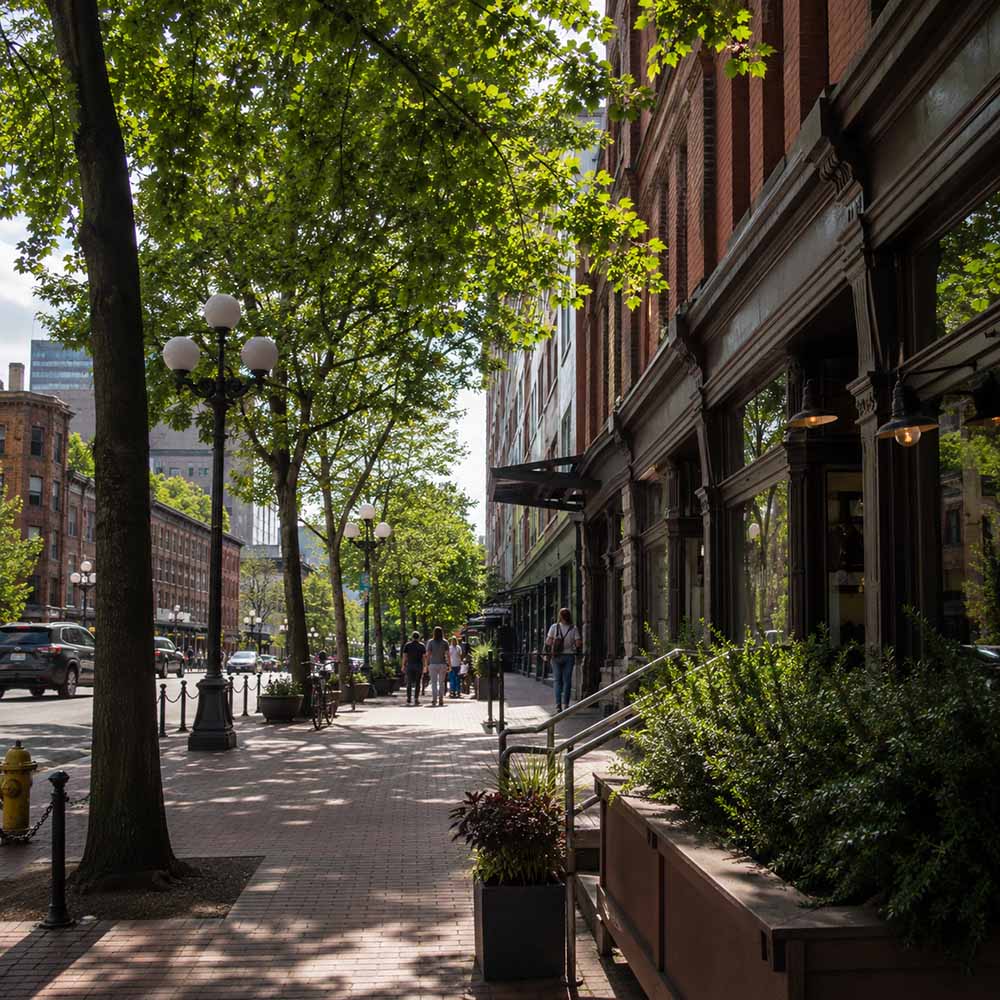
Today, Pioneer Square, built along the same ground the old route once crossed, still carries that legacy, disputed origins and all, still trading on a claim to the origin of skid row that the record itself never quite settles.
The origin of skid row turns out to be less a settled fact than a story Seattle told well enough to make its own, part real 1850s logging road, part good book decades later.
What’s not in dispute is where those logs actually ended up. They were rafted out to ships waiting in Elliott Bay, bound for markets as far off as Australia, on the same stretch of water Seattle’s Tall Ship sails today.
Sail out across Elliott Bay on a Seattle’s Tall Ship sailing tour and experience the water that once carried Seattle’s whole economy out to sea.
Book a sail with Seattle’s Tall Ship
If you have never experienced the thrill of sailing on our tall ship, there is no better time to try than now. With multiple sailing times and experiences available, our family-friendly harbor experiences are a must-do Seattle activity. Join us today!