
Tall Ships in Seattle
How tall ships helped form the city we know and love (and how to experience the thrill of tall ship sailing today)
Long before Seattle had a skyline, it had a harbor. The deep, sheltered waters of Elliott Bay drew the first European settlers not because of the surrounding land, but because of what the water could carry. Tall ships in Seattle were once as common as the rain, their masts lining the waterfront like a second forest, loading lumber bound for cities that were still finding their shape.
The story of how this city grew from a muddy shoreline into one of the Pacific Northwest’s great ports is, at its core, a story about ships and wind and the people who understood both. Sailing vessels didn’t just visit Seattle. They fed it, built it, and connected it to the wider world when overland routes through the Cascades were barely passable.
That maritime heritage still runs beneath the surface of the modern city. It lives in the shape of the waterfront, the names of the streets, the working harbor that hums alongside the parks and restaurants. And it lives, perhaps most vividly, in the experience of sailing these waters under canvas.
Canoes, Currents, and the First Navigators
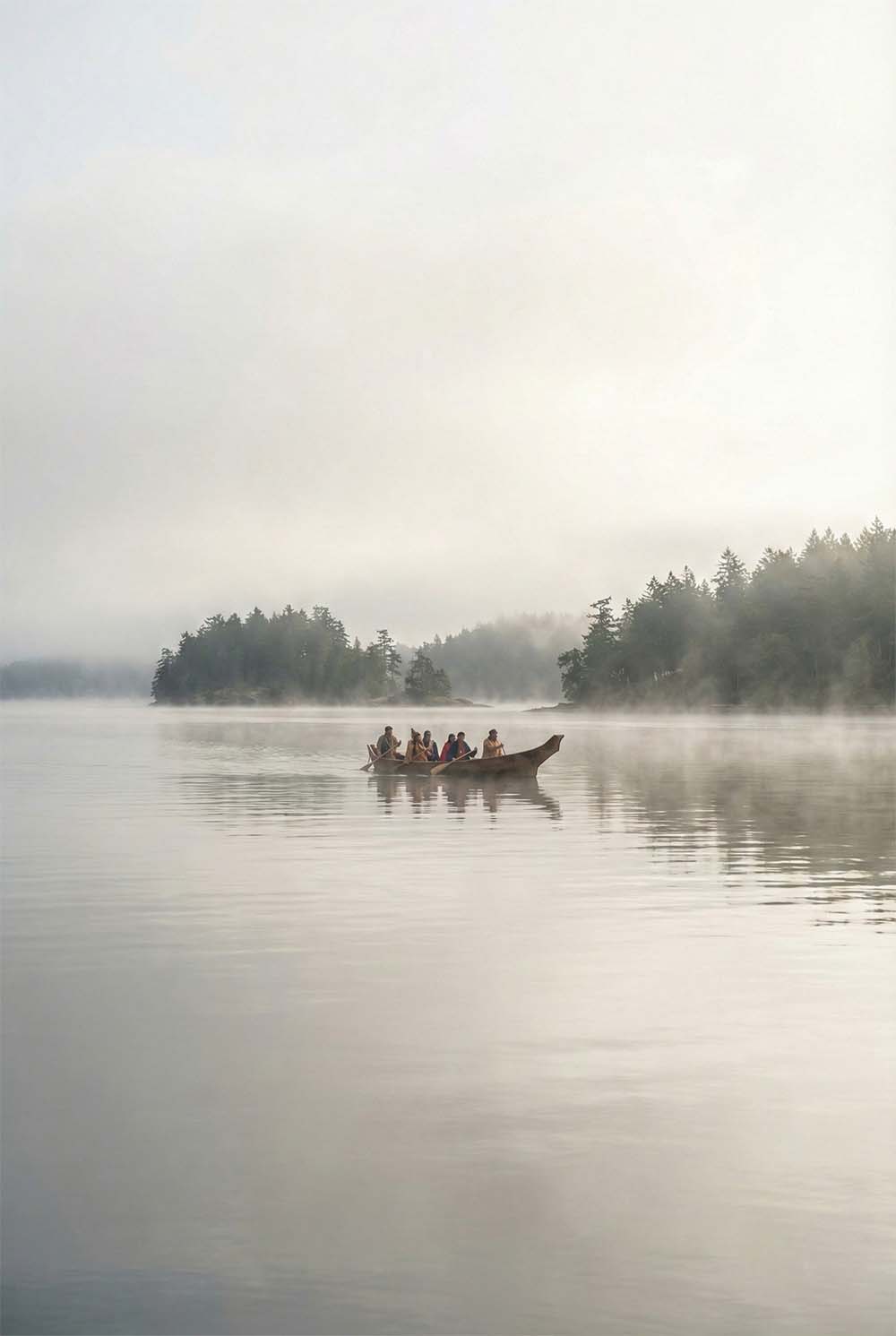
The waters of Puget Sound have been navigated for thousands of years. Long before any European sailing vessel entered Elliott Bay, Coast Salish peoples had developed a deep understanding of the region’s tides, currents, and seasonal wind patterns. Their cedar canoes, some over fifty feet in length, moved people, trade goods, and cultural knowledge across vast stretches of water with precision and confidence.
Puget Sound itself is a network of deep channels, protected bays, and narrow passages carved by ancient glaciers. It functions less like a single body of water and more like a system of interconnected roads. The Coast Salish peoples treated it exactly that way, maintaining trade routes that linked communities from the San Juan Islands to the southern reaches of the Sound and well beyond.
When the first European and American explorers arrived in the early 1800s, they encountered a maritime culture already deeply established. Water was not a barrier in this landscape. It was the primary means of travel, commerce, and community. That reality would shape every chapter of the region’s future.
Captain George Vancouver sailed through these waters in 1792, charting the coastline and naming landmarks that still appear on maps today. His expedition relied on the same winds and tidal patterns that had guided Coast Salish canoes for generations. The geography rewarded those who understood how to work with current and wind, and it always had.
By the 1850s, the handful of settlers who would eventually build Seattle chose their location with the water in mind. Elliott Bay offered deep-water anchorage close to shore, meaning oceangoing vessels could load and unload without extensive port infrastructure. The age of tall ships in Seattle was about to begin.
The city that grew from that muddy shoreline was, in every sense, born from the water. Its founders weren’t farmers seeking fertile plains. They recognized that a deepwater port on Puget Sound could connect the Pacific Northwest’s vast forests to markets around the world. In those foundational decades, every one of those connections would travel under sail.

Lumber, Gold, and the Ships That Built a City
Henry Yesler’s sawmill, built in 1853, set everything in motion. Logs skidded down what is now Yesler Way to the waterfront, where they were milled into lumber and loaded onto waiting ships. Those vessels, with holds deep enough to carry thousands of board feet, sailed Seattle’s timber south to San Francisco and beyond. The tall ships in Seattle’s harbor weren’t passing through. They were the engine of the local economy.
Through the 1860s and 1870s, lumber schooners became a constant presence along the waterfront. Their masts rose above the wooden buildings of the young city, and their schedules dictated the rhythm of daily life. When ships arrived, there was work. When they departed fully loaded, there was money. Seattle’s earliest prosperity came plank by plank, carried in the hulls of wooden sailing vessels.
The waterfront grew to match the traffic. Wharves extended into Elliott Bay. Warehouses lined the shore. Shipwrights, sailmakers, and chandlers set up shop near the docks. The infrastructure of a real port city was taking shape, and sailing ships were the reason it existed at all.
Then came the Klondike Gold Rush of 1897, and Seattle transformed almost overnight. The city became the last supply stop before Alaska, and the waterfront erupted with activity. Ships of every size crowded Elliott Bay as tens of thousands of prospectors passed through. The businesses that outfitted them turned Seattle from a regional lumber town into a city of national significance. The Klondike Gold Rush National Historical Park in Pioneer Square preserves this era in vivid detail.
Those Gold Rush years accelerated the city’s growth in ways that still show on the map. Pioneer Square, rebuilt in brick after the Great Fire of 1889, became the commercial heart of a newly ambitious city. The port expanded. Rail connections strengthened. But it was the constant flow of ships in and out of Elliott Bay that made all of it possible.
By the early 1900s, Seattle’s waterfront was among the busiest on the West Coast. The transition from sail to steam was underway, but the tall ships that had carried lumber south and prospectors north had already done their foundational work. They had put Seattle on the map as a port city the world could not ignore.
A Maritime Legacy Written Into the Waterfront
The shift from sail to steam didn’t erase Seattle’s tall ship heritage so much as layer over it. The waterfront evolved through the twentieth century, absorbing new industries alongside new technologies. But the bones of the port district still trace back to the era when wind-driven vessels lined the shore. The piers, the orientation toward deep water, the working-harbor energy. All of it began under canvas.
You can still read that history in the landscape if you walk the waterfront with it in mind. The piers that now house restaurants and public attractions were originally built to receive cargo from sailing vessels and steamships. Pioneer Square, the city’s oldest neighborhood, sits where it does because of its proximity to the original harbor. Even the streets slope toward the water, following the same grade that logs once traveled on their way to Yesler’s mill and the waiting ships below.
Several organizations work to keep this legacy alive. The Center for Wooden Boats, on the south shore of Lake Union, maintains a fleet of traditional vessels and offers hands-on sailing that connects visitors to the region’s boat-building heritage. Northwest Seaport preserves historic ships and runs programs that bring maritime history off the page and onto the water.
Tall ships in Seattle today carry a different kind of cargo. They carry curiosity, connection, and a sense of what this city felt like before highways and container cranes reshaped the shoreline. The vessels that sail Elliott Bay now aren’t hauling lumber to California. They’re offering something the original ships never could: a chance to experience the water the way Seattle’s founders knew it, with the modern skyline as your backdrop.
That thread connecting past and present is part of what makes Seattle’s relationship with the water so distinctive. This isn’t a city that sealed its maritime history behind glass. It’s a city where you can still feel it, in the salt air and on the deck of a wooden ship.

Where Seattle’s Tall Ship Story Continues
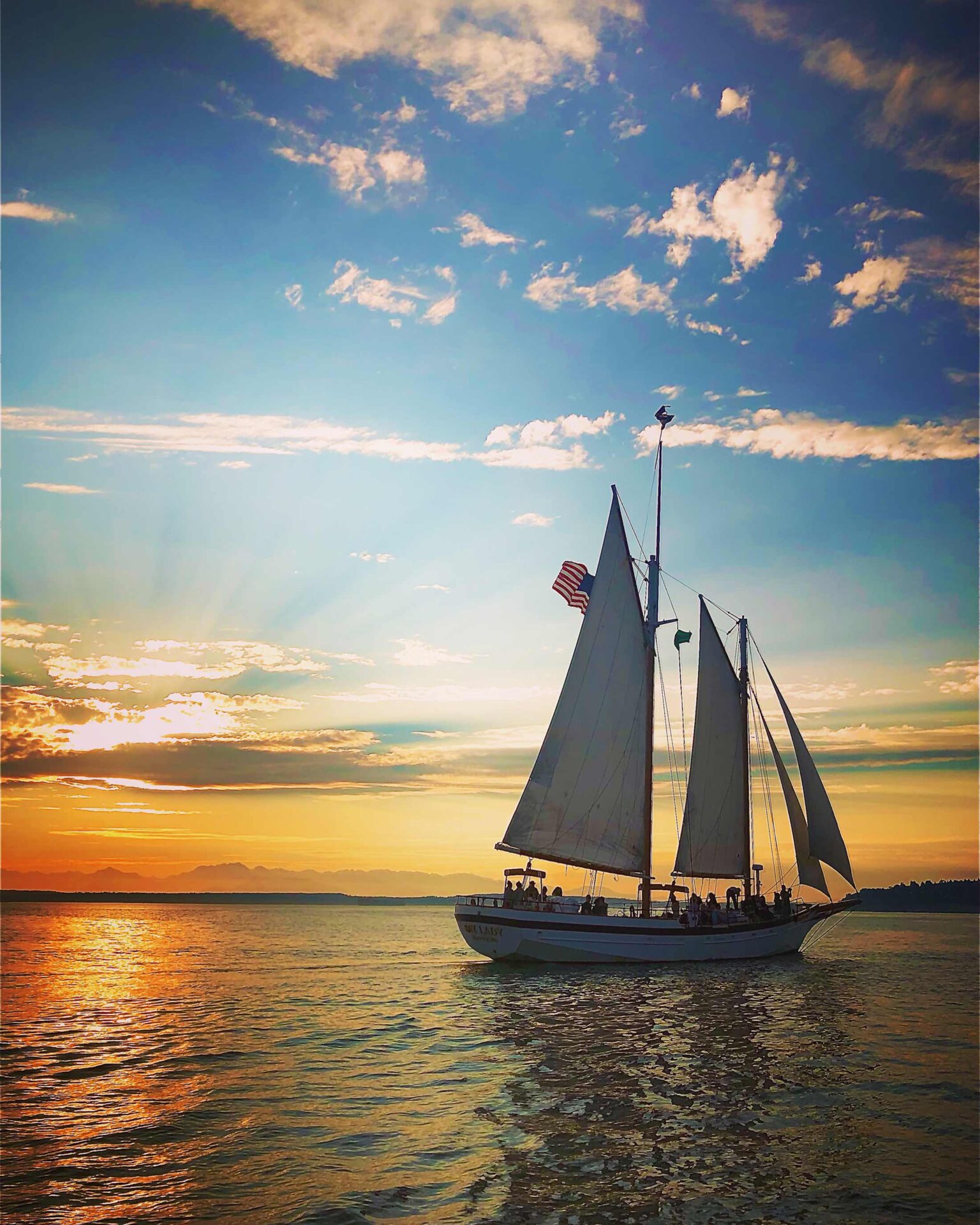
There’s no better way to feel that living history than from the deck of a sailing vessel. Seattle’s Tall Ship sails from the city’s waterfront aboard the Bay Lady, a traditional wooden tall ship with canvas sails that moves through Elliott Bay the way vessels have for generations. The creak of the rigging, the snap of canvas catching wind, the slow pivot of the bow as the sails draw taut. Every sound connects you to the forces that once carried lumber schooners and gold-rush clippers across this same water.
A sail aboard the Bay Lady reframes the city. From the water, Seattle’s skyline settles into a different kind of perspective. The mountains reveal themselves behind the buildings. You can see how the waterfront was shaped around the harbor, how the piers reach toward deep water, how the city still faces Puget Sound the way it always has. The history you’ve been reading about becomes something you feel in the wind and the motion of the deck beneath your feet.
The experience is relaxed and unhurried. You’re not being narrated at or rushed through a checklist of landmarks. You’re aboard a sailing vessel, moving at the pace the wind allows, with a drink in hand and the city slowly turning around you. On sunset sails, the light over Elliott Bay goes golden and then pink, the kind of thing that stays with you long after you’re back on shore.
For anyone drawn to the story of tall ships in Seattle, a sail aboard the Bay Lady is the closest you’ll come to stepping inside that history. This city was built by the water, shaped by the ships that came and went, and defined by its connection to Puget Sound. Sailing these waters with Seattle’s Tall Ship is a way to feel all of that at once, carried forward by the same wind that once built a city from timber, ambition, and canvas.
Seattle owes more to its sailing past than most people realize. The harbor that drew the first settlers, the lumber trade that funded the early growth, the Gold Rush frenzy that put a small port town on the national map. Those chapters all unfolded on the water, carried by wind across the same stretch of Elliott Bay that defines the city today.
That history doesn’t have to live only on the page. Tall ships in Seattle once built a city. Today, they offer a chance to step back into that story, to feel the wind fill a canvas sail and see the skyline from the water where it all began. Seattle’s Tall Ship makes that connection aboard the Bay Lady, sailing from the same waterfront that launched over a century of maritime ambition. The harbor is still here. The wind is still blowing.
Book a sail with Seattle’s Tall Ship
If you have never experienced the thrill of sailing on our tall ship, there is no better time to try than now. With multiple sailing times and experiences available, our family-friendly harbor experiences are a must-do Seattle activity. Join us today!